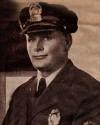
Norman F. Silkworth, a 26-year-old male of White/Caucasian ethnicity, was a King County sheriff’s deputy who responded before dawn on March 7, 1952, to a robbery call at the Inglewood Golf and Country Club near Kenmore, north of Seattle. Four masked men had overpowered two night watchmen and a dishwasher, looted the safe and slot machines, and fled.
The dishwasher, 57-year-old Ralph Bishop, managed to free himself, retrieved a handgun from his upstairs room, and moved through the darkened building amid broken slot machines and an open safe. Deputies Silkworth, Claude Dodd, and William Randecker, along with Washington State Patrol Trooper Jim Terhar, arrived and entered the clubhouse, announcing themselves. Bishop, who was not wearing his hearing aid, mistook the arriving officers for the bandits returning and opened fire. Deputies Dodd and Randecker were wounded and retreated for medical help; Silkworth was struck in the neck and head and died inside the club. Responding troopers and deputies soon found Bishop wandering the grounds and recovered his gun.
In the aftermath, Bishop pleaded guilty to manslaughter and received a deferred sentence. Investigators also pursued the original holdup crew: five men and three women were charged in the burglary of the country club, though four of those suspects were never apprehended. The Sheriff’s Office later noted that Silkworth had served the department for about fourteen months and was survived by his wife. Commemorations of his death by local and state law-enforcement memorial organizations have emphasized the tragic chain of confusion that turned a successful escape from captivity into a fatal crossfire for the responding deputy.