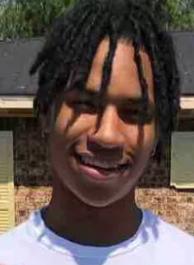
Derek Lewis, a 39-year-old male from Bowling Green, Kentucky, was shot late on the night of August 1, 2016, in a residential neighborhood just off Fair Street. That Monday had already slipped into darkness when gunfire broke the routine of the 1000 block of Fair Street. Wounded, Lewis managed to move away from the spot where he was hit, making his way toward nearby Payne Street.
Shortly before 11 p.m., he reached a home in the 1100 block and pounded on the door, telling the resident that he had been shot. Police and emergency responders were called, and officers arriving on the scene followed a trail of blood back toward Fair Street, identifying it as the likely location of the shooting. From Bowling Green, Lewis was airlifted by medical helicopter to TriStar Skyline Medical Center in Nashville, Tennessee, where he died in the early hours of August 2.
In the immediate aftermath, the shooting was treated as a homicide, but authorities initially released few details. Investigators from the Bowling Green Police Department canvassed the area, seeking witnesses and physical evidence around Fair Street and Payne Street. Early reports noted that another nearby home, occupied at the time, was struck by gunfire, raising the stakes for investigators who now had a deadly shooting and stray rounds entering a residence to account for. Detectives appealed to the public for information, emphasizing that they were still working to establish a clear motive and identify everyone involved.
A crucial break came from Lewis himself while he was still conscious. According to police records later described in court coverage, he provided officers with a phone number that he said was linked to the man who had shot him. He told police, in essence, that this person was trying to kill him and that if he died, that man was responsible. Lewis also indicated that the shooter was involved in crack cocaine trafficking and that he had been in a gold Ford Crown Victoria on the night of the attack. Those details gave investigators specific leads: a phone number to trace, a vehicle to look for, and a suspect profile tied to the local drug trade.
Within days, police publicly identified a suspect: 34-year-old Maurice Lonnell Candies. Authorities described him as a homeless man who should be considered armed and dangerous, and they announced that he was wanted in connection with the fatal shooting on Fair Street. A murder warrant was issued out of Bowling Green, and local news outlets carried his name and age, urging anyone who might know his whereabouts to contact law enforcement. With Lewis’s death now confirmed at the Nashville hospital, the case shifted from an urgent search for a gunman to a multistate manhunt centered on Candies.
The manhunt ended more than a week after the shooting, hundreds of miles from Kentucky. Acting on information from the U.S. Marshals Service, deputies from the Stanton County Sheriff’s Office in Nebraska located Candies at a residence in the small town of Stanton. When they searched the home, they found him hiding inside a bathroom cabinet. He was arrested there on the outstanding Bowling Green murder warrant and held in Nebraska while extradition proceedings were arranged. Once the legal process in Nebraska was complete, Candies was brought back to Warren County, Kentucky, and booked into the Warren County Regional Jail to face the charges stemming from Lewis’s death.
By early September 2016, Candies was standing in Warren Circuit Court for his first major appearance in the homicide case. He was arraigned on charges of murder and tampering with physical evidence, with a public defender appointed to represent him. A Warren County grand jury also returned indictments that included a separate charge of possession of a handgun by a convicted felon. Court records and reporting from the time noted that Lewis’s statements on the night of the shooting, including the phone number and description of the vehicle and alleged drug activity, formed part of the evidentiary foundation against Candies. Investigators also described the multiagency effort that had led to his capture in Nebraska, highlighting how the case crossed state lines within days of the shooting. Alongside the charges against Candies, a co-defendant, Danielle Kena Houchins of Bowling Green, was indicted on a count of first-degree hindering prosecution or apprehension, accused of helping him avoid arrest in the aftermath of the killing.
Over the next year, prosecutors and defense attorneys prepared for trial, with additional court filings indicating that evidence gathered by Bowling Green police was being turned over to the defense. Before the case could reach a full trial, however, it took a decisive turn. On December 1, 2017, Candies appeared again in Warren County Circuit Court and entered a guilty plea to the charge of murdering Derek Lewis. The Commonwealth’s Attorney’s Office recommended a 25-year sentence to run consecutively with time tied to prior drug trafficking charges in Missouri, noting that Candies had been on parole for that earlier case at the time of the shooting. Sentencing was scheduled for early 2018, with the plea ending the prospect of a contested murder trial and firmly establishing Candies’s responsibility for Lewis’s death in the eyes of the court.
In February 2018, Candies was formally sentenced to 25 years in prison for the Bowling Green murder. Coverage of the sentencing hearing reported that he admitted in court to fatally shooting Lewis on Payne Street on August 1, 2016, with Lewis dying the next day at the Nashville hospital. Kentucky’s Department of Corrections later recorded Candies as an active inmate, housed at Kentucky State Penitentiary, with institutional records showing an expected sentence expiration in 2041 and parole eligibility in the mid-2030s, consistent with a lengthy murder sentence imposed in early 2018. Meanwhile, Lewis’s name entered the rolls of gun-violence memorial sites and obituary pages, where the basic facts of his life in Bowling Green—his birth in 1977, his age at death, and the way a late-night shooting on Fair Street took him from his family—remain preserved long after the legal case against his killer was resolved.