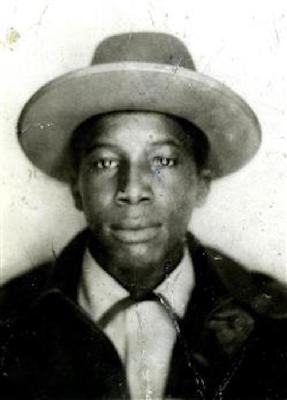
On the night of February 2, 1958, Daniel Bell, a 23-year-old Black / African American man, was driving through Milwaukee when a routine traffic matter turned into a fatal encounter with two Milwaukee police officers. Federal court records later identified Bell as 23, rather than 22. At about 8:30 p.m., Officers Thomas Grady Jr. and Louis Krause, who were assigned to traffic duty, were near North 7th Lane and West Wright Street when Grady noticed a car with a defective taillight.
Grady began following the vehicle on his motorcycle, with Krause close behind. Krause would later testify that shortly before the stop Grady had made a racist statement about wanting to make additional arrests that night, an account that became part of the later litigation.
After Grady stopped the car, Bell suddenly got out and ran. Grady later claimed that as he approached the vehicle he thought Bell resembled a man described in a police bulletin as being wanted for an armed robbery. The description in that bulletin, however, differed from Bell in several respects, including age, height, weight and clothing. Bell's relatives believed he fled because he was afraid of being arrested for driving without a valid driver's license. Contemporary records indicated he had previously been arrested for driver's-license violations. No victim of the recent robberies police investigated after Bell's death positively identified him as the person responsible.
Bell ran east on Wright Street and then north on North 6th Street as Grady and Krause pursued him. Both officers shouted for him to stop and fired several shots into the air during the pursuit. Krause then stopped a passing automobile, commandeered it and had its driver turn around so the officers could continue the chase by car. After catching sight of Bell again, Grady and Krause jumped from the vehicle and resumed the pursuit on foot.
Bell ran toward a house at 2650 North 6th Street. Grady, still holding his loaded revolver, caught up with him near the southwest corner of the house and reached toward Bell's shoulder. Grady's gun discharged, striking Bell in the upper back. Later forensic testimony showed that this was not a long-distance shot: powder evidence indicated that the muzzle of Grady's revolver had been only inches from Bell's coat, with testimony at the subsequent inquest placing it at approximately one inch. Bell collapsed on the service walk and died there.
What happened immediately afterward became central to the case. A nearby resident, William Hochstaetter, heard the gunshot and came outside. He testified that when he saw Bell lying on the ground shortly after the shooting, he did not see a knife in Bell's hands. Years later, Krause revealed that Bell had not threatened Grady with a knife. According to Krause's later account, Grady first produced a small knife from his own clothing, then obtained a larger pocketknife and placed it in Bell's right hand. Bell's sister would later tell investigators and courts that Bell was left-handed and that a knife belonging to him was still at the home where he was living.
Grady and Krause then constructed a story to justify the shooting. Their reports claimed that Bell had emerged from his automobile carrying a knife, had identified himself as a holdup man and had threatened Grady. The explanations changed as investigators examined the physical evidence. One account placed Grady more than 23 feet from Bell when the fatal shot was fired, another estimated 10 to 15 feet, and a later version reduced the distance to about six feet. The autopsy evidence showing that the gun had been within inches of Bell forced another revision. Grady ultimately testified at the inquest that the two were extremely close when the weapon discharged.
The officers also claimed Bell had lunged at Grady with a knife, but several civilian witnesses did not corroborate that version. Hochstaetter said he saw no knife when he first approached the body. Other witnesses who surfaced in the days after the shooting said they had not seen Bell threaten Grady at the scene. There were also discrepancies between the officers' original homicide reports and later reports alleging an attempted aggravated battery on Grady. Despite those inconsistencies and the close-range findings from the autopsy, a Milwaukee County coroner's inquest held on February 14, 1958, concluded that the shooting was justifiable.
Grady remained free and was not criminally convicted at that time. He resigned from the Milwaukee Police Department on November 10, 1958. Bell's family, however, continued to challenge the official account. His father, Dolphus Bell, pursued a wrongful-death claim against the City of Milwaukee beginning in 1959. That litigation did not expose the full circumstances of the shooting, in part because the police version continued to be presented as the truth.
The case changed dramatically roughly two decades later. In 1978, Louis Krause went to Milwaukee County District Attorney E. Michael McCann and admitted that he and Grady had lied about Bell's death. Krause disclosed that Bell had not lunged at Grady with a knife and that the knife found in Bell's hand had been planted. Investigators subsequently arranged recorded telephone conversations between Krause and Grady in December 1978. During those conversations, Grady acknowledged planting the knife, although he maintained that the shooting itself had been accidental.
The new evidence led directly to criminal action against Grady. On August 29, 1979, the Milwaukee County District Attorney's Office charged him with homicide by reckless conduct for Bell's death and perjury for his false testimony surrounding the 1958 inquest. Grady pleaded guilty to both offenses. He was sentenced to seven years in prison and was released on parole after serving approximately three years. Krause, although acknowledged in later federal proceedings as a participant in fabricating the original story and concealing the circumstances of the shooting, became the witness whose disclosure finally brought the cover-up to light.
Bell's surviving family members also filed a federal civil-rights lawsuit in 1979. During a lengthy trial in 1981, testimony, police reports, autopsy evidence, the original inquest record, Krause's disclosures and Grady's admissions were examined in detail. The jury found that Grady had unlawfully shot and killed Bell while acting as a Milwaukee police officer and that a conspiracy had concealed the true circumstances of the death. The civil proceedings also implicated Krause and found participation in the concealment by additional police officials. The litigation ultimately produced a judgment of approximately $1.59 million for members of Bell's family and the family estates, although portions of the damages and legal findings were later reviewed and modified on appeal.
More than twenty years passed between Bell's death and Grady's criminal conviction. What had originally been officially described as a justified police shooting of an armed fleeing suspect was eventually shown through witness testimony, physical evidence, Krause's confession and Grady's own recorded admissions to have involved a planted weapon and false accounts of the encounter. Thomas Grady Jr., the officer who fired the fatal shot, was ultimately convicted through his guilty pleas of homicide by reckless conduct and perjury, bringing the criminal case to a conclusion that was markedly different from the finding reached by the 1958 inquest.