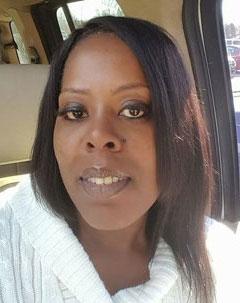
Ann Van Dyke, a 59-year-old white woman from the small town of Louisville in Clay County, Illinois, died on May 2, 2018, in circumstances later recorded as a death caused by gun violence. She had been rooted in this rural county seat—a close-knit community where generations of families live within a short drive of one another—and it was there, on a Wednesday evening, that her life came to an abrupt end.
Ann was born on March 6, 1959, to Robert “Bob” L.
Van Dyke and Marie Dell Van Dyke, part of a family that had long ties to southeastern Illinois. After finishing high school, she chose a career focused on caring for others. She earned her nursing degree from Olney Central College and spent more than three decades working in the health-care field, a span of years in which she became known not just as a nurse, but as someone who treated patients and their families with steady kindness and patience. Colleagues and relatives remembered her as the sort of caregiver who stayed late without complaint, who listened as carefully to fears as she did to symptoms, and who quietly made herself indispensable in a profession that often asks much and gives little recognition in return.
By 2018, Ann was living in Louisville, Illinois, the small community that serves as the seat of Clay County and lies amid farm fields and two-lane roads in the center of the state. On the evening of May 2, she was found dead in a Louisville residence. A national online memorial that catalogs people killed with firearms lists her among those “lost to gun violence” on that date, linking her death to a local news report about two people discovered dead inside a home in Louisville. The public reporting available online stops short of spelling out the full narrative of what unfolded inside that house, but it is clear that her final moments were sudden and violent rather than the result of illness or long decline.
In the days that followed, the focus in public records shifted from the manner of her death to the life that had preceded it. Obituaries describe a woman whose world revolved around her family and her work. She left behind her son, Jacob Wendling, his wife Erin, and four grandchildren—Hayden Allen, Melia Jane, Elijah Jacob, and Lydia Marie—along with other relatives who had shared holidays, milestones, and ordinary days with her. Friends and family gathered at Frank & Bright Funeral Home in nearby Flora on May 9, 2018, where a service celebrating her life was led by Pastor Gary Fortkamp. Afterward, Ann was laid to rest in Orchard Hill Cemetery back in Louisville, returning her to the same community that had shaped her life from childhood onward.
Those paying tribute to Ann were encouraged to direct memorial contributions to Clay County Hospice and the Effingham Unit 40 Foundation, organizations connected to the worlds of health care and education that reflected the values she had carried through her career and family life. Online guestbooks and memorial pages show messages of condolence and remembrance rather than discussions of an investigation, reading like a communal attempt to hold on to the parts of her that gunfire could not erase. Across these public records, there is no indication that anyone has been publicly named as a suspect, arrested, or prosecuted in connection with her death, and no trials or convictions tied to the case appear in the available coverage. Her story, as it can be reconstructed from the open record, is that of a longtime nurse and devoted mother whose life ended violently in her own community, leaving behind a family and town still defined more by their memories of her care than by any clear account of how justice might yet be done.