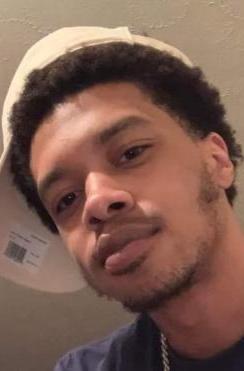
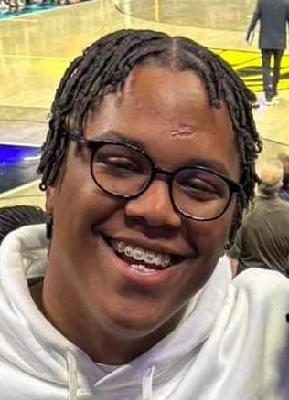
On a spring evening at Louisville’s Iroquois Park, Darryl Edmond King Jr., a 26-year-old male from the city, arrived at the basketball courts looking for a run, a laugh, and a little time away from the demands of work and parenthood. He held a steady job at the Ford Motor Company and was active at St. Stephen Church, but that day his mind was also on the future: earlier, he had been in contact with Simmons College about enrolling, trying to take the next step toward building a different life
for himself and his two young children. Friends and family would later describe him as a devoted father and a reliable provider, someone who was trying to do right by his family and who believed he still had time to turn big plans into reality.
As daylight faded on April 4, 2019, the basketball games in Iroquois Park drew a familiar crowd. The courts on Rundhill Road were known as a neighborhood gathering spot, a place where people from around the south side came to compete, talk, and unwind. That evening, however, a disagreement on the court began to escalate. According to what relatives later relayed from witnesses, King confronted another player during an argument, challenging him face to face rather than backing down. The other man left the court, and what might have remained a heated but forgettable dispute instead turned deadly when he allegedly returned armed with a handgun and opened fire near the courts. Players and bystanders scattered in panic as shots rang out, leaving King gravely wounded on the asphalt where he had been playing minutes before.
Police were called to the park around 7:45 p.m. after reports of gunfire near the basketball courts. When officers arrived, they could not immediately locate a victim; in the chaos, friends had already lifted King into a private vehicle and rushed him to Sts. Mary & Elizabeth Hospital. At the hospital, doctors tried to save him, but the wounds were too severe, and he was pronounced dead not long after arrival. Back at the park, homicide detectives began canvassing the area as the sun dropped behind the trees. A nearby home security system captured a figure sprinting through backyards and leaping a fence around the time of the shooting, evidence that investigators hoped would help identify the person who had fired the shots. In the days that followed, the homicide unit appealed to the public for information, urging anyone who had seen the argument, the shooting, or the fleeing figure to come forward.
While detectives worked the case, King’s family and loved ones were left to absorb the sudden loss. His obituary and memorial tributes painted a picture of a young father whose life revolved around his children, his parents, and his siblings, and who was anchored by his job and his church. At a gathering on the same basketball court where he was killed, his mother, Yvonne Rankins, spoke about how he had been a dependable son who looked after his family and took care to provide for his kids. His father, Darryl King Sr., wrestled openly with the pain of losing a child and with the broader violence he saw claiming lives in their community, calling for unity and for neighbors to look out for one another so that no other family would have to stand where theirs now stood.
Months passed with no public announcement of a suspect in custody, and the family’s grief became intertwined with frustration and uncertainty. In December 2019, nearly nine months after the shooting, relatives returned to the park for another gathering, this time a public plea for answers. They spoke about missed birthdays and holidays, about children who still asked for their father every day, and about how hard it was to move forward without knowing whether anyone would ever be held responsible. Local news coverage from that day captured the family’s hope that witnesses or people who had heard talk about the shooting would finally decide to speak, emphasizing that anonymity was possible and that any small detail might help.
A breakthrough finally came at the end of that year. On December 29, 2019, Louisville Metro Police announced that Ohio State Police had arrested a man named Leslie Winfrey shortly after midnight on a warrant of indictment for King’s murder. He was taken into custody in Lorain County, Ohio, where local authorities were also holding him on charges of felony drug possession and receiving stolen property. Reports from Ohio indicated that he was being held without bond on the local counts while officials worked out when he would be transferred back to Kentucky to face the homicide indictment. For King’s family, the news meant that the person accused of pulling the trigger on that April night was no longer free, though the long legal process was only beginning.
Over the next several years, the case made its way through the Jefferson County courts. Kentucky Department of Corrections records show that Winfrey was ultimately convicted in 2023 in connection with the killing at Iroquois Park. He was found guilty of second-degree manslaughter for the offense dated April 4, 2019, in a Jefferson County case numbered 20-CR-0031, and received a ten-year prison sentence for that conviction. The same record lists additional, later convictions from a separate 2022 incident for possession of a handgun by a convicted felon and first-degree wanton endangerment, also resulting in significant prison time. Taken together, the sentences place him in state custody at a medium-security facility, with a projected good-time release date in late 2028 and parole eligibility beginning in 2026, meaning that the man held responsible for King’s death is expected to remain incarcerated for years to come.
In the years since the shooting, King’s family has tried to keep his memory tied not just to the manner of his death but to the life he led and the hopes he carried. His father has spoken publicly about wanting to reclaim public parks as spaces for peace and community, organizing gatherings and calling on churches, neighbors, and local leaders to come together in places like Shawnee Park to talk about violence and how to stop it. Standing in front of microphones and camera lights, he has described the loss of his son as a wound that never fully closes, but one that he is determined to use as a catalyst to save others. Each time the family returns to the court where King once played, they remember a young worker and father who wanted more for himself and his children, and they remind anyone listening that his story is not just a case file, but a life cut short on an ordinary evening that should have ended with tired legs, laughter, and the promise of tomorrow.