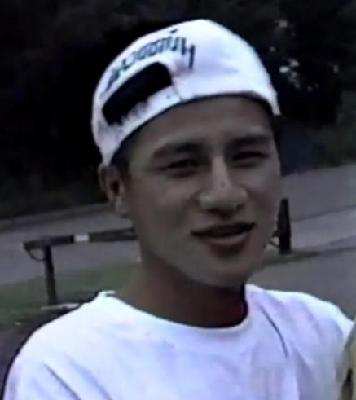
In the fading light of a November afternoon in 1989, a tragic encounter unfolded on a raspberry farm in Inver Grove Heights, a suburb of St. Paul, Minnesota, that would end the life of 13-year-old Basee Lor. A Hmong boy, Basee and his friend, 13-year-old Thai Yang, were fleeing from a stolen car on November 15, 1989, after a high-speed chase. Their flight from the law ended in a fatal confrontation with Inver Grove Heights police officer Kenneth E.
Murphy.
The sequence of events began when police received a report of a stolen Mazda, leading to a pursuit. The chase ended near a raspberry farm where three Asian teenage boys abandoned the vehicle and fled on foot. Officer Murphy, who had positioned himself at the farm in anticipation of their path, spotted two of the boys. Forty-eight seconds after radioing that he had eyes on them, a single blast from his shotgun echoed across the field.
Both Basee Lor and Thai Yang were struck by the pellets. Basee was hit by two pellets in his back, one of which lodged in his abdomen, while another grazed his arm. Yang was struck in the upper left shoulder, the pellet tragically severing part of his heart. Officer Murphy later stated that he had mistaken a screwdriver the boys were carrying for a gun. No firearm was found on either of the boys; however, a screwdriver with a stainless-steel blade was discovered on the ground between them.
The death of the two young boys sent shockwaves through the St. Paul Hmong community, leading to demands for a thorough investigation and protests against what they viewed as an unjust use of deadly force. The officer who fired the fatal shot, Kenneth E. Murphy, was not criminally charged in the deaths of Basee Lor and Thai Yang. The families of the two boys, however, filed a federal civil rights lawsuit against Officer Murphy and the City of Inver Grove Heights. While some claims against the city were dismissed, the court denied Murphy's motion for summary judgment on the Fourth Amendment claims, allowing the lawsuit against him to proceed. The case highlighted the deep-seated tensions between the Hmong community and local law enforcement, leaving a lasting legacy of grief and mistrust.