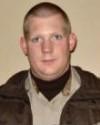
Michael Alan Hogan, a 43-year-old White/Caucasian male, was working as a patrolman with the Hutchinson Police Department when a routine call in Hutchinson, Minnesota, turned into a nightmare on December 15, 1989. That day he was dispatched to the J.C. Penney store along Minnesota Highway 15 after store security detained a suspect connected to stolen merchandise.
In the loss-prevention office, Hogan began the normal work of identifying the man and running his name, the kind of task that usually ends with paperwork and a quiet ride back out into the winter night. 
Instead, the suspect produced a handgun that had gone undetected and shot Hogan in the head at close range. In the sudden chaos that followed, the gunman bolted from the store and made his escape through the town, racing toward a nearby fast-food restaurant. There, he escalated from fleeing to controlling others, forcing two people to drive him away toward Minneapolis as authorities scrambled to lock down leads and warn the public. 
Hutchinson and the surrounding area moved from shock into an urgent manhunt, with the killing treated not only as a murder but as an attack on the community itself. Reports from the days immediately afterward described city leaders offering a substantial reward for information leading to an arrest and conviction, while law enforcement concentrated search efforts in and around Minneapolis as the suspect remained at large. 
Investigators ultimately identified the suspect as Phillip Lewis Cole, and the flight that began in the store did not end that night. Court records describe Cole being indicted for Hogan’s murder as well as additional crimes committed across a three-day span from December 15 through December 18, 1989, expanding the case beyond a single violent moment into a broader sequence of criminal acts. He was eventually arrested on the day of Hogan’s funeral, a detail that underscored how long the community had been waiting for the fear and uncertainty to break. 
Cole’s case went through the courts, where the proceedings focused on proving intent and holding together the chain of events that began with theft and ended with a slain officer. In Minnesota, he was convicted of first-degree murder for Hogan’s death, and the punishment reflected the gravity of killing an on-duty police officer: he was sentenced to life in prison.