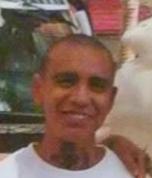
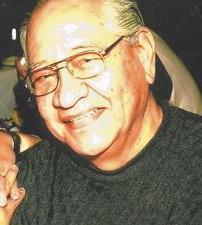
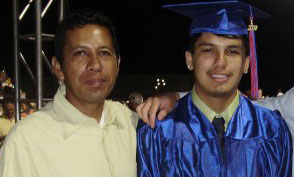
Vicente Herrera-Rosas, a Hispanic / Latino man from Phoenix, is remembered in public records today not through detailed news accounts, but as a name in cold-case rolls, listed simply as a homicide victim whose killing remains unsolved. In those databases he is recorded as having died by murder, with the Phoenix Police Department noted as the investigating agency, placing his case among the city’s unresolved violent deaths.
Instead of a narrative rich with personal detail, the trace of Vicente’s life that survives in open sources is sparse and formal, the kind of entry built from police reports and data feeds rather than from stories told by family and friends. Crime-mapping sites pull his name into “Area Cold Cases” sections, where it appears in a short table: a victim, a cause of death marked as murder, and a pointer back to a larger cold-case database that collects unsolved homicides from law-enforcement and public records. In that larger database, Phoenix appears hundreds of times, each line representing a life cut short, with Vicente’s case folded into that long list of people whose deaths have yet to be fully explained in court.
The way his case is cataloged communicates as much by what is absent as by what is present. The entry does not publicly spell out where in the city he was attacked, what weapon was used, or what circumstances led up to his death; it simply categorizes the offense as murder and leaves the narrative space blank. There is no officially released description of a confrontation on a specific street, no mention of witnesses, no sketch of a suspect vehicle, only the bare acknowledgment that something violent happened to Vicente in Phoenix and that it rose to the level of a homicide investigation.
Within the cold-case database, his name stands beside many others from Phoenix whose cases share a similar outline: an incident address somewhere in the city, the label “murder,” and the status “unsolved.” Project Cold Case, which maintains this compilation, notes that it exists precisely to document these unresolved killings, many of them drawn from large-city police departments that continue to carry substantial backlogs of open homicides. The Phoenix entries number in the hundreds, each one a reminder that behind the city’s skyline and growth lies a parallel history of families waiting for answers, and Vicente’s case is one of these quiet, unresolved stories.
Open records give no indication that anyone has ever been publicly identified, arrested, or charged in connection with Vicente Herrera-Rosas’s death. His listing appears without a named suspect, without a note that an arrest was made, and without a change in status from unsolved to cleared, suggesting that investigators either never developed a suspect they could bring to court or that whatever leads once existed have not yet been strong enough to support charges. In the public record, the case remains frozen in that unresolved state: a murder recognized by law enforcement and memorialized in data, but still without a known perpetrator, leaving Vicente’s story unfinished and his place in Phoenix’s history defined, for now, by the unanswered questions surrounding how and why his life was taken.