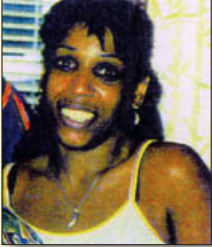
Valerie Regina Coleman, a 55-year-old Black/African American woman, was found fatally shot inside a residence on the 1700 block of 16th Street SE in Washington, D.C., on the morning of December 2, 2017. Officers responding around 8:13 a.m. discovered her with multiple gunshot wounds; D.C. Fire and EMS determined there were no signs of life, and she was later transported to the Office of the Chief Medical Examiner.
Her death turned a quiet Saturday morning into a crime scene that would quickly draw the attention of homicide detectives across the city.
Before the day was over, members of the Capital Area Regional Fugitive Task Force arrested Kevin Lamont Smith, 47, of Southeast D.C., and charged him with second-degree murder while armed. The swift arrest followed the initial scene processing and identification of Coleman, whose killing occurred inside the home, tightening the investigative focus on people with direct access to the residence. News of the arrest spread quickly as authorities confirmed the charge and provided the preliminary account of what they found when officers arrived.
In the months that followed, court proceedings detailed a stark narrative. Evidence presented at a February 2018 hearing established a substantial probability that Smith committed the shooting, moving the case toward trial even as questions about motive lingered. Later that year, Smith pleaded guilty to second-degree murder while armed; on November 16, 2018, a judge sentenced him to 25 years in prison followed by five years of supervised release. Reporting from the courtroom indicated prosecutors believed Smith’s suspicions of infidelity involving his girlfriend—who was also Coleman’s youngest daughter—fueled the killing, an allegation that cast the crime as an intimate eruption of violence inside a family’s orbit.
The sentencing closed the criminal chapter but could not restore what Coleman’s family told the court they had lost. In statements, relatives voiced the blunt finality of the act and the everyday absence that followed, underscoring how a shooting contained within four walls rippled outward—first through a neighborhood, then through the courts, and finally through years of grief that would outlast the headlines.