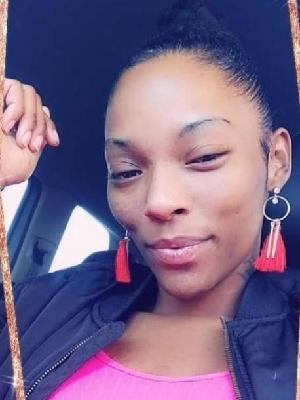
Lamique Wash, a 39-year-old Black/African American woman from Las Vegas, was killed on the morning of November 3, 2020, after an argument with her longtime boyfriend escalated into a shooting outside the Sunset Canyon Apartments in southwest Las Vegas. At about 7:15 a.m., Las Vegas Metropolitan Police received multiple reports of gunfire at the apartment complex near West Sunset Road and South Grand Canyon Drive. Officers arrived to find Wash suffering from numerous gunshot wounds.
She was transported to University Medical Center, where she was pronounced dead. The Clark County coroner later determined that she died from gunshot wounds to her head and back and ruled the death a homicide.
Investigators determined that Wash and her boyfriend, Laron Christopher Davis, had been arguing before the shooting. The couple had been romantically involved and had two children together. Evidence later presented in court showed that witnesses saw Wash and Davis together in the parking area of the apartment complex shortly before the gunfire. Several witnesses identified Davis as the man who was with her. Witnesses described the couple arguing, and two people recalled hearing Wash ask Davis what he was going to do and whether he was going to shoot her moments before shots rang out.
The confrontation reportedly began over a set of car keys. Wash was also speaking with her mother by telephone during the dispute. Two children were inside the apartment at the time, including a teenager and a younger child, but neither was physically injured. The shooting then unfolded outside the residence. According to evidence later reviewed by the Nevada Supreme Court, witnesses described Davis chasing Wash while firing a handgun at her. She eventually fell to the ground as Davis continued his flight from the area.
Forensic evidence established the extraordinary severity of the attack. Wash was struck by nine bullets. Two bullets struck her in the head, four entered her back, two struck her buttocks, and another bullet grazed her leg. The location and number of wounds became significant evidence when prosecutors later argued that the shooting demonstrated an intent to kill rather than an accidental or impulsive discharge of a firearm.
Davis left the apartment complex after the shooting. Authorities determined that he departed in an SUV that had been rented by Wash. He also left Nevada and remained away from the state for approximately six weeks. During the investigation, Davis acknowledged that he had been at the scene but denied being the shooter. He instead described another person whom he claimed was responsible. Investigators found problems with that account: Davis gave conflicting descriptions of the alleged alternative shooter, and witnesses did not corroborate his claim that another gunman had committed the killing.
Police identified Davis as the suspect and sought his arrest after the homicide. He was eventually taken into custody in January 2021 and booked in connection with Wash's death. The case proceeded through the Clark County court system, where prosecutors relied on the eyewitness identifications, Davis's presence at the scene, his departure in Wash's rented vehicle, his extended absence from Nevada after the shooting, his inconsistent statements about another supposed shooter, and the forensic evidence showing that Wash had been repeatedly shot.
Davis ultimately went to trial in Nevada's Eighth Judicial District Court. A jury found him guilty of first-degree murder with the use of a deadly weapon. He was also convicted of battery with intent to kill with the use of a deadly weapon constituting domestic violence. The domestic-violence finding reflected the established romantic relationship between Davis and Wash and the fact that they shared children.
Davis challenged his convictions on appeal, arguing among other things that the evidence was insufficient to prove his guilt, that his murder and battery convictions violated double-jeopardy protections, that prosecutors committed misconduct during the trial, and that alleged juror misconduct entitled him to a new trial. His attorneys also pointed to a post-verdict letter from a juror who expressed regret and described feeling pressured during deliberations.
The Nevada Supreme Court rejected those arguments in July 2025. The court concluded that there was substantial evidence from which a rational jury could find Davis guilty. It emphasized that multiple witnesses placed him with Wash immediately before the shooting, witnesses described him pursuing her while firing a pistol, and forensic evidence showed the repeated gunshot wounds that caused her death. The court also noted Davis's admission that he was present, his flight in the rented SUV, his departure from Nevada for several weeks, and the inconsistencies in his claim that another person had been responsible.
The court also rejected the double-jeopardy challenge and found no prosecutorial error serious enough to overturn the verdict. Although it determined that one prosecution comment concerning Davis's right to remain silent was improper, it concluded that the remark did not affect his substantial rights or justify reversing the case. Other challenged statements were either addressed when the trial judge sustained defense objections or were found not to constitute reversible misconduct.
Davis's attempt to obtain a new trial based on the juror's letter also failed. The Nevada Supreme Court concluded that the letter described the juror's internal thoughts, emotions, and deliberative process and therefore could not be used under Nevada law to challenge the validity of the verdict. With no admissible evidence establishing juror misconduct, the trial court was not required to hold an additional evidentiary hearing. On July 2, 2025, the Nevada Supreme Court affirmed Davis's judgment of conviction, leaving intact the jury's findings that he committed first-degree murder with a deadly weapon and battery with intent to kill with a deadly weapon constituting domestic violence in the killing of Lamique Wash.