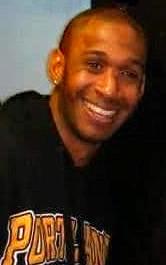
Donavon Lenford, a 24-year-old Black man, was killed on June 6, 2021, in a burst of gunfire that erupted inside a southeast Portland, Oregon, home. The tragic event, which claimed the lives of three other men, was the result of a robbery gone wrong.
That evening, police responded to reports of a shooting at a residence in the Creston-Kenilworth neighborhood. Inside, they discovered a scene of violence and four men deceased from gunshot wounds.
The victims were later identified as Donavon Lenford, Eyion Willis, 23, Mitchell Nacoste, 31, and Kendall Gragg, 27. Investigators determined that the shooting was the culmination of an attempted robbery of a large quantity of marijuana, estimated to be around 100 pounds, which was located at the residence. Nacoste and Gragg were half-brothers, and Nacoste resided at the home where the incident occurred.
The investigation revealed that three men, including Lenford and Willis, had traveled from Texas to Portland to carry out the robbery. During the attempted crime, a shootout ensued, resulting in the deaths of the two intruders, Lenford and Willis, as well as the two occupants of the house, Nacoste and Gragg. A third individual who had accompanied the men from Texas reportedly fled the scene in a van.
In March 2022, a significant breakthrough was made in the case with the arrest of 27-year-old Jeremy Michael Lenoire in Frisco, Texas. He was taken into custody by a team of law enforcement officers, including Portland Police detectives and U.S. Marshals. Lenoire was subsequently extradited to Oregon to face multiple charges, including two counts of second-degree murder, two counts of first-degree robbery, and two counts of first-degree burglary. Prosecutors alleged that Lenoire was the third man involved in the planning and execution of the robbery.
Lenoire's trial began in Multnomah County in May 2025. During opening statements, the prosecution laid out their case, asserting that Lenoire and his accomplices had planned the robbery in Texas. They presented evidence that the men had taken measures to conceal their identities and avoid leaving evidence, such as taping the treads of their shoes. The prosecution argued that although Lenoire may not have fired the fatal shots, he was a willing participant in the felony that led to the four deaths, making him culpable under the felony murder rule.
In his defense, Lenoire’s attorney argued that his client was a victim of mistaken identity. The defense claimed that Lenoire had traveled to Portland not to commit a robbery, but to participate in social justice protests. While a firearm legally owned by Lenoire was found at the scene of the crime, his defense contended that it had been used by someone else during the fatal altercation. The outcome of the trial has not been publicly reported.