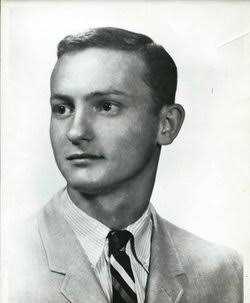
William Plant Jr., a 24-year-old male from Parkersburg, West Virginia, was killed during a burst of violence in downtown Parkersburg during the early morning of August 20, 1969. Plant was inside the Club Ada Bar & Tap on Sixth Street, between Market and Avery streets, with club owner Charles “Con” Hardman and patron John Simons when David Lee Grimm returned to the establishment after having been there several times during the preceding evening and early morning.
Grimm, a Marine Corps veteran who had served in Vietnam, had reportedly been drinking and had experienced disputes connected with the club. Testimony later presented in court indicated that Hardman had previously refused Grimm entry when Grimm tried to bring alcohol into the establishment, and witnesses said Grimm had made statements about getting even with Hardman. Nothing in the available online record establishes that Plant personally had been involved in those disagreements or that Grimm had a separate grievance against him.
At approximately 3:30 that morning, Grimm returned wearing green military fatigues and carrying a high-powered rifle. He had also brought military ordnance, including tear-gas grenades and a land mine. Grimm threw a tear-gas grenade through a small opening or peephole in the club's front door, then crossed the street and positioned himself partly behind a nearby abutment. The grenade filled the establishment with gas, forcing Plant, Hardman and Simons through the front door. As the three emerged, Grimm opened fire. Plant and Hardman were killed, while Simons was seriously wounded. The court record describes the shooting as occurring at close range and identifies Grimm's rifle as the weapon used. The available sources do not provide a detailed description of Plant's individual gunshot wounds or an autopsy account, but they consistently identify the gunfire outside Club Ada as the cause of his death.
The attack did not end with the shootings outside the club. Witnesses saw Grimm moving through the area with the rifle raised over his head, at times appearing to march or perform a military-style movement. When two bank couriers drove into a nearby parking area, Grimm fired at their vehicle, striking one courier and wounding him in both legs. He then fired at a parking attendant and shot toward people attempting to reach the UpTowner Inn. Farther along his route, Grimm approached Lawrence Walters as Walters was driving home from work. According to Walters' later testimony, Grimm announced that he had already killed several people and might as well kill him too, then fired into Walters' neck, seriously wounding him. Grimm also encountered two young newspaper carriers, fired near them after ordering them to run, and made statements indicating hostility toward African Americans. Although those remarks became part of the evidence describing his conduct that morning, the available sources do not establish that Plant's killing was specifically racially motivated; the evidence presented concerning a prior grievance centered primarily on Hardman.
Police identified Grimm rapidly. His brother, who worked at Club Ada and had been present around the time of the attack, was among those who identified him, and police were taken to Grimm's Lakeview Drive residence. Officers found Grimm asleep in bed at approximately 6:30 a.m., only a few hours after Plant and Hardman were shot. According to the court record, Grimm was difficult to awaken and appeared confused when he came to. Police arrested him at the residence. Wet clothing and shoes associated with the events were found nearby, and investigators later recovered the rifle and other military items from a creek a short distance from his home. Ballistics evidence subsequently connected spent cartridge cases from the various shooting locations to Grimm's recovered rifle. Witnesses who survived encounters with the gunman also positively identified him.
Grimm's mental condition became an issue almost immediately after his arrest. When he appeared before a justice of the peace later that morning, witnesses described him as making irrational statements, accusing people of being communists, striking the table with his hands and using profanity. Two physicians appointed to examine him reported that he had a definite mental problem. Grimm later maintained that he remembered being at Club Ada earlier in the night but had no memory of the shootings themselves. He said his recollections resumed only in fragments, including memories associated with artillery fire and his experiences in Vietnam. He testified that he had suffered a head injury during military service and experienced headaches afterward. His defense would ultimately argue that mental illness prevented him from being criminally responsible for the killings.
A Wood County grand jury indicted Grimm in October 1969 on two murder counts and a felonious-assault or malicious-wounding charge arising from the shooting spree. Before a murder trial could proceed, his competency became the subject of extensive litigation. A jury convened in February 1970 to determine whether he was mentally capable of standing trial but could not reach a verdict. After additional examination and hearings, the judge ruled in May that Grimm was competent. Prosecutors then elected to proceed first on the indictment charging him with the murder of Hardman. That trial began on May 11, 1970, and ended on May 22 with Grimm being found guilty of first-degree murder with a recommendation of mercy, which made him eligible for parole rather than requiring imprisonment without that possibility. He was sentenced to life imprisonment. The insanity defense was the central dispute: a defense psychiatrist believed Grimm suffered from serious mental illness and did not understand the consequences or wrongfulness of his actions at the time of the shootings, while a state psychiatrist disputed that diagnosis. The jury rejected the insanity defense.
Grimm appealed the Hardman conviction, but in April 1973 the Supreme Court of Appeals of West Virginia affirmed it. Significantly for Plant's case, that appellate opinion noted that Grimm had been indicted for two other felonies committed during the same episode and stated that those charges had not been disposed of at that time. One of those outstanding indictments was the separate murder charge arising from Plant's death. The available online court decisions and retrospective reporting do not document a separate trial in which Grimm was convicted specifically of murdering Plant. Instead, the lengthy prosecution and appeals that followed continued to revolve around the conviction obtained for Hardman's murder.
The legal battle nevertheless continued for years. In February 1978, Grimm obtained a new trial through habeas corpus proceedings. He was tried again for Hardman's murder and once more found guilty of first-degree murder with a recommendation of mercy. During that second prosecution, the defense presented extensive testimony concerning Grimm's mental condition after Vietnam, including relatives who described major behavioral changes, nightmares and episodes in which he appeared to reenact wartime experiences. Multiple experts testified for the defense that they believed he had been mentally ill at the time of the shootings. The state continued to contest the insanity claim.
In September 1980, the West Virginia high court reversed the second conviction and ordered another new trial. The court found serious problems with the jury instructions governing the insanity defense, concluding that once sufficient evidence raised a genuine issue about Grimm's sanity, the prosecution bore the burden of proving sanity beyond a reasonable doubt. The court also found prejudicial error involving a police booking report prepared shortly after Grimm's arrest. The defense had specifically requested written records of interviews or interrogations, had been told that no such material existed, and was then confronted at trial with the booking record. Because Grimm had been able to provide routine personal information shortly after the shootings, prosecutors used the document to counter the defense portrayal of him as mentally incapacitated. The appellate court concluded that withholding the record had unfairly affected preparation of the defense.
There was ultimately no further trial. By the time the 1980 reversal returned the case to Wood County, Grimm had already been released on parole, and numerous witnesses from the original proceedings had either died or moved away. Prosecutors dismissed the case rather than attempt another prosecution. Thus, although Grimm was arrested within hours of Plant's killing, indicted for both murders, twice convicted of Hardman's murder and imprisoned, the available online record does not show a separate conviction entered for the murder of William Plant Jr. The surviving legal history instead shows Plant's death as part of the same Club Ada attack underlying Grimm's prosecution, while the formally litigated murder conviction concerned Hardman and was eventually reversed before the prosecution was dismissed. Grimm later left the Parkersburg area and moved to Kentucky, where he was killed by his wife in 2002.