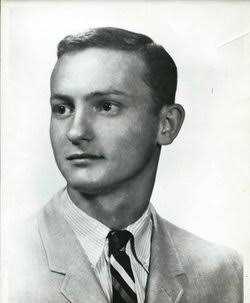
Charles “Con” Hardman, 35, a White/Caucasian man, was the owner of the Club Ada Bar & Tap on Sixth Street in Parkersburg, West Virginia, when a dispute involving patron David Lee Grimm escalated into a deadly attack during the early morning of August 20, 1969. Court testimony later indicated there had been friction before the shooting. Witnesses for the prosecution described Grimm making hostile remarks about getting even with Hardman after earlier incidents at the club, including an
occasion when Hardman refused him admission because he was attempting to bring alcohol inside. Defense witnesses disputed parts of that account, but the prosecution treated the prior encounters as evidence that Grimm harbored ill will toward Hardman.
Shortly after 3 a.m., Grimm left the club and, according to the court record, returned roughly twenty minutes later wearing green Marine fatigues and carrying a high-powered rifle, a tear-gas grenade and other military equipment. He inserted the tear-gas grenade through a small opening in the club's front door and moved across the street, taking cover near a concrete or railroad-bridge abutment. When the gas forced Hardman, William Plant Jr. and John Simons out of the building, Grimm opened fire. Hardman and Plant were killed, while Simons was seriously wounded. The violence did not end at the club; Grimm subsequently fired at other people around downtown Parkersburg, wounding additional victims as he moved away from the scene.
Police were able to identify Grimm quickly. His brother, Doug Grimm, worked at Club Ada and was among the people who connected him to the shooting; Doug accompanied officers to Grimm's home on Lakeview Drive. At about 6:30 that morning, officers found Grimm asleep in bed and reportedly had difficulty waking him. He appeared nervous and pale after awakening and was placed under arrest. Investigators found wet clothing and shoes associated with him, and later recovered the rifle from a creek a short distance from the house along with a pouch connected to military ordnance. A firearms examiner subsequently testified that cartridge cases recovered from the various shooting locations had been fired from the recovered rifle. Simons and several other witnesses also positively identified Grimm.
A later appellate record added that Grimm and his wife had driven to a small stream after the shootings and placed the rifle in the water before returning home. The available court and newspaper accounts do not indicate that she was prosecuted in connection with Hardman's killing, and they identify Grimm as the gunman rather than describing a second shooter. After his arrest, Grimm was taken before a justice of the peace. Testimony from that proceeding described him making irrational statements and behaving in an agitated manner, beginning what would become the central legal issue in the case: whether he had been legally sane when the shootings occurred.
A Wood County grand jury indicted Grimm during the October 1969 term on charges stemming from the shootings, including two murder counts and another felony involving one of the wounded victims. He entered pleas of not guilty and not guilty by reason of insanity. Before the murder case could proceed, his lawyers challenged his competency to stand trial. A competency proceeding in February 1970 ended without a jury verdict because the jurors could not agree. The court subsequently ruled on May 6 that Grimm was competent, and the state elected to try him for Hardman's murder. That trial began May 11 and concluded May 22, 1970, with Grimm found guilty of first-degree murder with a recommendation of mercy.
Insanity remained the defense throughout the litigation. Grimm testified during the original trial that he remembered being at the club before the shooting but could not remember the gunfire or much of what happened afterward. He described a combat-related head injury suffered while serving as a Marine in Vietnam and recurring severe headaches. A defense psychiatrist concluded that Grimm suffered from paranoid schizophrenia and believed that he had been unable to understand the consequences or wrongfulness of his actions at the time of the shootings; the prosecution presented contrary evidence. The conviction resulted in a life sentence with the possibility of parole, and the Supreme Court of Appeals of West Virginia affirmed the judgment in 1973.
The case nevertheless remained unsettled. In February 1978, Grimm obtained a new trial through habeas corpus proceedings. He was again found guilty of first-degree murder with a recommendation of mercy. During that later litigation, his defense presented extensive evidence concerning his mental condition, including numerous lay and expert witnesses; most of the defense experts described him as suffering from serious mental illness at the time of the offense. On September 23, 1980, the Supreme Court of Appeals reversed the second conviction. The court ruled that the jury had been improperly instructed about the burden of proof on insanity and also found prejudicial the prosecution's failure to disclose a police booking/interrogation record before trial. That record, taken shortly after Grimm's arrest, had been used to suggest he was capable of answering routine questions coherently, directly undermining the defense theory concerning his mental state.
The 1980 decision sent the case back for another trial, but that trial never occurred. By then Grimm had already been released on parole, and many witnesses from the original investigation were reported to have died or moved away. Prosecutors ultimately dismissed the case rather than trying him again. Thus, although Grimm was arrested within hours of Hardman's death and was twice convicted of first-degree murder, neither conviction remained intact through the end of the appellate process, and the prosecution concluded with dismissal after the final reversal. The available online accounts identify no alternate gunman or competing suspect in Hardman's killing.