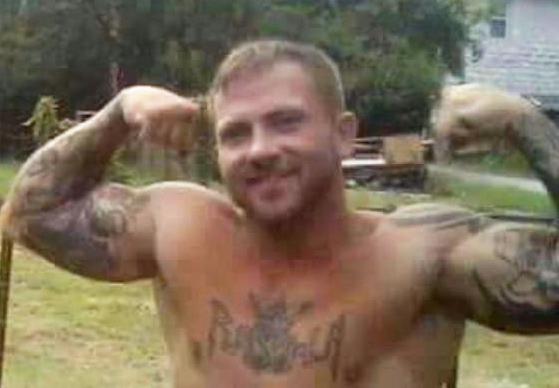
Charles Morgan Marsh, a 34-year-old construction worker and Vietnam veteran from South Carolina, was known to some by the nickname "Swampy." In the fall of 1979, he was living in a residence on Dry Run Road in Parkersburg, West Virginia. His life came to a horrific end on November 20, 1979, in a crime that would remain a disturbing local memory and a testament to the depths of human cruelty.
The case would go cold for years before a break in an unrelated investigation would finally reveal the identity of his killer.
On that Tuesday, Marsh's girlfriend returned to the home and made a discovery that would haunt the community for decades. The house had been ransacked, but the true horror lay in the bedroom. Marsh's body was on the bed, his hands handcuffed behind his back. He had been strangled with a telephone cord and then brutally decapitated. In a final, macabre act, the killer had placed Marsh's head on a nightstand beside the bed and had taken the time to comb his hair. The girlfriend, in a state of terror, fled the house and ran to a nearby bar to get help, screaming, "They've killed him, they've cut his head off."
The initial investigation was a joint effort between the Wood County Sheriff's Office and the West Virginia State Police, later assisted by the Parkersburg Police Department. Former detective Bob Newell recalled the immediate belief that the murder was drug-related, a theory bolstered by Marsh's known involvement in drug dealing. Investigators found $30,000 in cash hidden under the mattress where Marsh's body lay. Despite the shocking nature of the crime, the case yielded no forensic evidence and all leads quickly grew cold. For several years, the brutal slaying of Charles Marsh remained an unsolved mystery, a chilling story whispered in the Parkersburg area.
The break in the case came years later and from another state. Detectives in Columbus, Ohio, were investigating a drug trafficking ring and the 1982 disappearance of a couple, Christopher and Peggy Lerch. While questioning two women, they received information that led them back to the Parkersburg cold case. The women told investigators that they had accompanied a man named William Dean Wickline Jr. to Marsh's residence on the day of the murder. Wickline, it turned out, knew Marsh through drug deals.
William Dean Wickline Jr., who became known as "The Butcher," was a career criminal who had learned how to butcher meat while in prison. The investigation revealed that Wickline had gone to Marsh's home, handcuffed him, and tied his legs with a telephone cord. He then tortured Marsh for hours, attempting to get information about money, drugs, and the location of his girlfriend before strangling and decapitating him. After the murder, Wickline stole Marsh's truck and abandoned it in nearby Williamstown.
Wickline was a serial killer, responsible for at least three murders between 1979 and 1982. His guiding philosophy was said to be "no corpse, no crime," and he often dismembered his victims. In December 1984, after his ex-girlfriend Teresa Kemp confessed her role in the Lerch murders, Wickline was charged. He was subsequently convicted of the aggravated murders of Christopher and Peggy Lerch, whose bodies were never found.
In April 1985, Wood County, West Virginia, indicted Wickline for the murder of Charles Morgan Marsh. However, because Wickline was already on death row in Ohio for the Lerch killings, the charges in West Virginia were eventually dropped. Former Wood County Prosecutor Harry Deitzler, who was called to the gruesome scene in 1979, recalled the moment he arrived to see deputies and paramedics standing around the bed. The case, he noted, was ultimately solved through the diligent work of investigators who followed the leads from Ohio.
On March 30, 2004, William Dean Wickline Jr. was executed by lethal injection at the Southern Ohio Correctional Facility. He was 52 years old. While justice was served for his other crimes, he never stood trial for the savage murder of Charles Morgan Marsh. The case is officially considered closed, the final chapter written not in a West Virginia courtroom, but in an Ohio execution chamber.