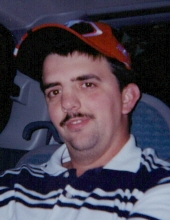
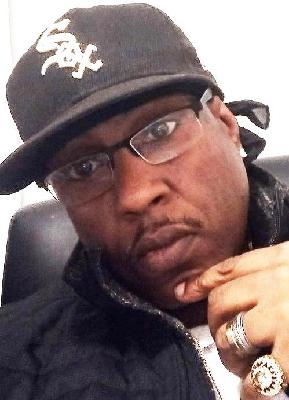
Jonathan Dwayne Janey, a 32-year-old White male, was a deputy with the Putnam County Sheriff’s Office who had served his community for nine years when he was killed during an arson investigation in Putnam County, West Virginia, on August 17, 1989. Although he was off duty from the sheriff’s department that night, Janey was working for Nationwide Insurance Company, which had received information that a residence on Cow Creek Road might deliberately be burned as part of an insurance scheme. Authorities later established that the homeowner, Raymond Huck, had hired Robert M. Gray to set fire to the house so Huck could collect insurance proceeds. Janey was assigned to watch the property and determine whether the suspected arson attempt would occur.
At approximately 1:15 a.m., Janey saw Gray enter the residence carrying containers and begin pouring gasoline inside. Janey radioed for assistance and moved in to apprehend him.
Gray realized he was being watched and fled from the rear of the house, prompting Janey to chase him. Janey caught Gray and managed to secure one handcuff on him. What followed became the fatal confrontation at the center of the criminal case. Gray and Janey struggled, and Gray shot the deputy three times at close range. Law-enforcement memorial accounts describe Janey being shot twice in the chest and then, after he had fallen, being shot again in the head with a. 357-caliber handgun. Gray later maintained that he had fired in self-defense during the struggle, but prosecutors and the eventual jury rejected that explanation.
Gray fled into the surrounding area after the shooting. Putnam County deputies Stephen Farley and Bobby Blankenship eventually captured him approximately six miles from the Huck property after a search that lasted several hours. Gray initially denied shooting Janey, but while being transported to the Putnam County jail he confessed. His statement was later reduced to writing and signed. Gray subsequently claimed that officers had beaten him and that the confession had been coerced. Police disputed his allegations, maintaining that the cuts and bruises visible on Gray resulted from his struggle with Janey and his flight through the woods. A trial judge conducted a suppression hearing and ruled that Gray’s statement could be admitted into evidence.
Gray was indicted for first-degree murder and was tried in the Circuit Court of Putnam County. In 1990, a jury found him guilty of first-degree murder and recommended mercy, resulting in a life sentence with the possibility of parole rather than a life sentence without parole. The prosecution’s case was also tied directly to the planned insurance arson: the West Virginia Supreme Court of Appeals later described the evidence as establishing that Raymond Huck had hired Gray to burn Huck’s house so Huck could obtain insurance money. Huck faced his own prosecution arising from the same events and pleaded guilty before his trial began, although the appellate decision discussing Gray’s case does not specify the precise offense to which Huck entered his plea.
Gray appealed his murder conviction, challenging the admission of his confession, arguing that extensive pretrial publicity had tainted the jury pool, and objecting to several jurors who previously had been selected for Huck’s planned trial. He also raised other issues concerning the evidence and the application of the felony-murder rule. On May 28, 1992, the Supreme Court of Appeals of West Virginia rejected his arguments and affirmed the conviction. The court concluded that the trial judge had not been clearly wrong in finding Gray’s confession admissible and found no basis for overturning the jury’s verdict.
Because Gray had received a life sentence with mercy, his imprisonment eventually became the subject of repeated parole proceedings. Janey’s family consistently opposed his release. Gray was denied parole in 2011 and again in subsequent hearings, including 2014 and 2017. At the 2017 hearing, Gray continued to maintain that the shooting had occurred in self-defense, while Janey’s relatives and Putnam County Prosecutor Mark Sorsaia argued against his release. The West Virginia Parole Board again denied parole. Gray never regained his freedom; he died in prison in March 2020, bringing the possibility of any future parole to an end.
Janey’s death continued to be remembered within Putnam County law enforcement long after the prosecution ended. He had joined the sheriff’s office in 1980 and was survived by his parents, siblings, nieces and a nephew. In 2018, West Virginia lawmakers moved to memorialize his service by naming the Interstate 64 bridge over Cow Creek Road the Deputy Sheriff Jonathan Janey Memorial Bridge, placing a permanent memorial near the area where the investigation that took his life unfolded.