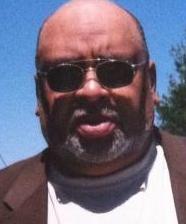
Carl Hopkins Jr., a 61-year-old Black/African American man who lived in Oak Hill, West Virginia, was killed on January 25, 2014, during what should have been an ordinary Saturday afternoon visit to property near Barboursville. He had accompanied his brother Garrick Hopkins to a parcel of land Garrick and his wife had recently purchased beside a residence on Lane Drive. Garrick was planning to build a new family home there and had brought Carl along to see the property. The brothers were examining an outbuilding on the newly acquired land when gunfire suddenly came from a neighboring house.
The neighboring resident, Rodney Bruce Black, later told investigators that he had seen the Hopkins brothers at the outbuilding and believed they were tampering with what he thought was his tool shed. According to the criminal complaint, Black went for a. 243-caliber rifle, loaded it and fired from a window of his home, striking the brothers.
Investigators said there had been no confrontation between Black and the Hopkins brothers beforehand. Black did not go outside to determine who the men were, did not warn them and did not contact authorities before opening fire. After the shootings, however, he called 911 and reported that he had shot two people, then remained at the residence awaiting deputies. No first aid was given to the brothers after they were shot.
Authorities quickly determined that Black's belief about the property was mistaken. The shed the brothers were examining was on the land Garrick had purchased, and investigators said Black had no belongings stored inside it. Sheriff Tom McComas emphasized that the Hopkins brothers had a legal right to be where they were. Court-related reporting indicated that the shots were fired from an upstairs bedroom window from approximately 120 feet away. Investigators found no indication that Black had left his house and approached the brothers before firing. Carl and Garrick both died at the scene from the gunfire.
When deputies searched Black's home, they discovered an extensive collection of firearms and ammunition. A property receipt associated with the search listed 54 firearms, including 37 long guns and 17 handguns. Among the weapons was the Remington Model 700. 243-caliber rifle Black reportedly identified as the gun used in the shootings. Investigators also recovered numerous other rifles, shotguns and handguns. The discovery became a significant part of later discussion surrounding the case, particularly after information emerged that Black had a long history of mental-health problems.
Black was arrested and charged with two counts of first-degree murder in the deaths of Carl and Garrick Hopkins and initially was held without bond at the Western Regional Jail. His preliminary hearing was scheduled for February 4, 2014, but his defense waived the case directly to a grand jury in exchange for an open-file agreement concerning the investigation. Following that proceeding, the Cabell County Prosecutor's Office and Public Defender's Office issued a joint statement saying that their investigation had found no indication that race was a factor in the killings. A Cabell County grand jury subsequently indicted Black on two murder counts in March 2014.
The criminal case later became focused heavily on Black's competency to stand trial. His public defender disclosed that he had experienced mental-health problems for decades, and Circuit Judge Paul T. Farrell ordered him sent to a state psychiatric hospital for evaluation and treatment. The case therefore did not proceed toward a conventional murder trial while questions remained about whether Black was mentally capable of understanding the proceedings and assisting in his defense.
In January 2016, a court ruled Black incompetent to stand trial for the killings. Medical testimony reportedly indicated that his condition was essentially untreatable, and he was committed to a mental hospital for life. The commitment did not amount to a murder conviction or an acquittal. The charges remained tied to the possibility that, should Black ever become competent, he could still face trial for the deaths of the Hopkins brothers. Available reporting does not show that a later trial or criminal conviction occurred. Thus, although Black was arrested, indicted and formally accused of killing Carl and Garrick, the case ultimately stopped short of a verdict because he was found incompetent to stand trial.