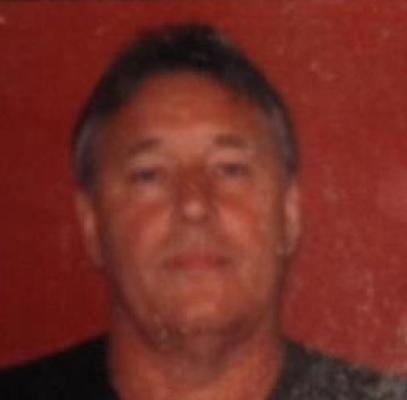
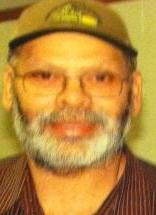
Garrick Hopkins, a 60-year-old Black/African American man from Milton, West Virginia, was killed on January 25, 2014, during what was supposed to be a visit to property near Barboursville where he hoped to build a new home for his family. Hopkins had recently purchased a lot adjoining the home of Rodney Bruce Black along Lane Drive. That Saturday afternoon, Garrick brought his older brother, Carl Hopkins Jr., with him to see the property and the place where the new house was planned. Both brothers were married and had children.
At approximately 2:30 p.m., the brothers were near an outbuilding on Garrick's newly purchased property when Black saw them from his nearby home. According to the criminal complaint, Black later told investigators that he believed the two brothers were shaking the door of what he thought was his tool shed. Rather than approaching them or contacting authorities first, investigators said Black retrieved a.
243-caliber rifle, loaded it and fired from a bedroom window. After shooting one of the brothers, he worked the bolt on the rifle and fired again, striking the other. Both Garrick and Carl were fatally wounded. Authorities said the shots were fired from approximately 120 feet away.
The investigation quickly established that Black had been mistaken about the property. Cabell County Sheriff Tom McComas said Garrick had recently purchased the adjoining lot and that the brothers had every legal right to be there. The shed Black apparently believed belonged to him was actually located on Hopkins' property, and investigators reported that it contained none of Black's belongings. Sheriff officials also said there was no evidence that Black had previously interacted with or even knew the brothers before the shooting.
Black remained inside his residence during the shooting. Investigators found no indication that he had walked outside to confront Garrick or Carl beforehand. In his statement to detectives, Black acknowledged that he had not warned the brothers before firing. He also said that no first aid was provided afterward. Authorities reported that Black called 911 after the shootings, told dispatchers that he had shot two people and waited for law enforcement officers to arrive.
Cabell County deputies arrested Rodney Bruce Black at the scene. He was charged with two counts of first-degree murder and initially held without bond at the Western Regional Jail. A subsequent search of his home uncovered an unusually large collection of firearms and ammunition. Reports based on the search stated that investigators found 54 guns, consisting of 37 long guns and 17 handguns. The. 243-caliber rifle was identified in court records as the type of weapon used in the killings.
The circumstances of the killings prompted questions about why Black responded with deadly force to two people whom he had never confronted and who were lawfully standing on property that belonged to Garrick. Investigators said there was no indication that Black was under the influence of drugs or alcohol. In February 2014, after investigators and attorneys had examined the case, the Cabell County Prosecutor's Office and the Public Defender's Office issued a joint statement saying their investigation had uncovered no indication that a racial motive was responsible for the deaths.
Black had been scheduled for a preliminary hearing on February 4, 2014, but his attorney waived the hearing, allowing the murder charges to proceed directly toward consideration by a grand jury. The waiver was made in exchange for what was described as an open-file agreement regarding the continuing investigation. The following month, a Cabell County grand jury indicted Black on two counts of first-degree murder in connection with the deaths of Garrick and Carl Hopkins.
As the prosecution moved forward, however, questions about Black's mental competency became central to the case. His public defender disclosed that he had a history of mental-health problems extending back approximately three decades. Circuit Judge Paul T. Farrell ordered him to a state psychiatric hospital for evaluation and treatment. Over the following years, Black moved between jail and Sharpe Hospital in Weston as doctors repeatedly evaluated whether he was mentally capable of understanding the proceedings and assisting his attorneys in his defense.
The competency findings changed more than once. Black was found incompetent to stand trial during one evaluation, was subsequently found competent several months later and then underwent additional examinations. By January 2016, four separate mental evaluations had been reviewed in court. Forensic psychologist Dr. David Clayman testified that three of the four evaluations had concluded Black was incompetent, despite using different evaluation methods. Clayman agreed with those assessments and told the court that he did not believe Black could be restored to competency. He described diagnoses including a delusional disorder and paranoid schizophrenia and said doctors had also observed signs of dementia.
On January 8, 2016, the court again ruled Black incompetent to stand trial. Because experts believed his condition was essentially not restorable, he was ordered to remain in a state mental hospital, where he would continue receiving treatment. The ruling meant there would be no conventional murder trial or verdict unless Black later became competent enough to face the charges. Authorities made clear that if he were ever restored to competency, the two murder prosecutions could proceed. As a result, despite Black's arrest, two first-degree murder charges and grand-jury indictment, the case did not culminate in a criminal conviction.
Garrick Hopkins' death was especially tragic because he was standing on land he had lawfully purchased and was sharing plans for his family's future with his brother when both were killed. What began as an afternoon visit to inspect the property where a new home was supposed to rise instead ended with two brothers dead, an adjoining property owner charged with their murders, and years of court proceedings focused not on whether the shootings occurred, but on whether the accused was mentally competent to stand trial for them.