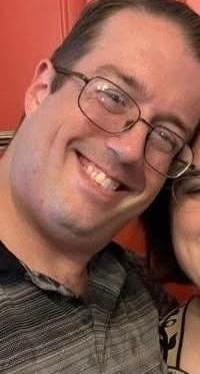
Philip S. Kesner, a 23-year-old White male, was an off-duty West Virginia State Police trooper when his life intersected with a mass escape from the West Virginia State Penitentiary in Moundsville on the night of November 7, 1979. He had served with the state police for approximately three years and was married to Constance Kesner. The couple had been married since April 24, 1978, and had no children. That evening they were traveling past the penitentiary just as fifteen inmates were breaking free, turning an ordinary drive through Moundsville into the scene of one of the most notorious prison escapes in West Virginia history.
The escape unfolded shortly after 8 p.m. Inmates gathered near the prison control center, confronted Sergeant Jerry Daff, and forced access through secured areas. Officer John Villers was then overpowered at the control cage, where the prisoners obtained a handgun and operated the electronic doors leading outside.
Once the inmates spilled onto Jefferson Avenue, Kesner's passing automobile became their means of escape. Court records describe the prisoners stopping the vehicle, pulling Kesner from it, forcing his wife out, and commandeering the car. A later reconstruction of the incident places the confrontation at approximately 8:15 p.m. and describes Kesner trying to resist as several inmates surrounded the automobile.
During the struggle, Kesner was shot in the chest. Despite being mortally wounded, he managed to draw his own revolver and fire repeatedly at the escapees as they fled in his car. One of his rounds struck escapee James Lester Collins. Kesner collapsed after the gunfire, while Constance escaped without being shot. Emergency personnel found Kesner still alive and transported him to Reynolds Memorial Hospital in nearby Glen Dale, where he was pronounced dead at approximately 8:53 p.m. A detailed later account states that the fatal bullet entered the upper left side of his chest and passed through his heart. Collins, meanwhile, bled to death from his wound; his body was subsequently discovered inside Kesner's abandoned automobile near Waynesburg, Pennsylvania.
The identity of the person who actually fired the fatal shot at Kesner is unusually complicated because the surviving public record contains conflicting accounts. The Officer Down Memorial Page and a number of long-standing published histories identify Ronald Turney Williams, an escape organizer already imprisoned for the murder of Beckley Police Sergeant David Lilly, as the person who shot Kesner. That version became the commonly repeated account for decades. However, the West Virginia Supreme Court's 1982 decision in State v. Wayne records that witness Wesley Scott had offered to testify that another escapee, Jack Hart, was the person who pulled Kesner from the automobile and shot him. A detailed 2024 reconstruction based on court material and interviews likewise argues that Hart possessed the weapon and fired the fatal shot, while Williams had separated from that group and departed in a different vehicle. That same reconstruction acknowledges that inmates gave contradictory statements at the time, variously implicating Hart, James Collins, Donald Layne, or Harold Gower in possession or use of the weapon. As a result, public sources do not present a completely uniform account of who physically pulled the trigger, even though Williams was long identified as the shooter in official memorial narratives.
Investigators and prosecutors did not limit responsibility for Kesner's death to a single gunman. A special Marshall County grand jury returned 82 indictments stemming from the breakout, and eleven recaptured escapees were scheduled for arraignment on charges that included murder, armed robbery, kidnapping and escape. Prosecutors lodged a murder count against each of those escapees in connection with Kesner's killing, reflecting the theory that participants in the violent escape and robbery could be criminally responsible for the homicide whether or not they personally fired the fatal round. Two armed-robbery allegations concerned the taking of Kesner's automobile and the theft of a Department of Corrections revolver. Jack Stephen Hart and Thomas Burton also faced an additional kidnapping accusation after authorities said they held Moundsville resident Daniel Reynolds for three days and then forced him to drive them to Ritchie County, where the pair were apprehended.
David Morgan became one of the escapees specifically convicted of murder in Kesner's death. Morgan had already been serving a life sentence when the breakout occurred. His trial was transferred from Marshall County to Mineral County, and in December 1980 a jury found him guilty of murder in the shooting death of Kesner. The jury recommended mercy, which made the resulting first-degree-murder punishment compatible with eventual parole eligibility rather than permanent imprisonment without the possibility of parole. Contemporary reporting said he would be eligible for parole consideration after ten years and that he still faced two robbery counts and two kidnapping counts connected with the escape. The defense presented evidence concerning Morgan's drug use in prison and argued that drugs could have affected his ability to act responsibly, but the jury nevertheless convicted him.
William Ellsworth Wayne was also convicted of first-degree murder with a recommendation of mercy for his role in the same episode. His case demonstrates why more than one escapee could be convicted even though only one bullet caused Kesner's fatal wound. Prosecutors argued that the prison break involved a continuous series of robberies: inmates forcibly obtained access and property from prison guards, stole a firearm and then robbed Kesner of his automobile while escaping. Wayne maintained that he was not among the prisoners surrounding Kesner's car and therefore should not be responsible for the homicide. The jury rejected that position. On March 26, 1982, the Supreme Court of Appeals of West Virginia upheld his conviction, ruling that the felony-murder doctrine could apply because the robberies, escape and killing were part of one continuous transaction. The decision therefore established criminal responsibility without requiring proof that Wayne himself fired the shot.
Ronald Turney Williams became the most famous fugitive from the breakout. While most of the escapees were captured relatively quickly, Williams remained at large for approximately eighteen months and was placed on the FBI's Ten Most Wanted Fugitives list on April 16, 1980. His flight extended far beyond West Virginia, and authorities in several states sought him for additional violent crimes. On June 8, 1981, FBI agents located him during a stakeout at the George Washington Hotel in New York City. When confronted, Williams drew a weapon and a gunfight followed; he was struck several times and taken into custody. The FBI officially records June 8, 1981, as the date of his capture. He was subsequently returned to the criminal justice system to face outstanding prosecutions and additional imprisonment. Later West Virginia reporting described him as serving two life-with-mercy murder sentences as well as two consecutive sentences of 25 to 100 years for kidnapping.
The legal aftermath also extended to the State of West Virginia itself. Constance Kesner later pursued a wrongful-death claim against the Department of Corrections. In proceedings that resulted in a January 1986 decision, the state conceded liability and acknowledged that the escape, and therefore the death and injuries that followed, probably would not have occurred without negligence by at least two correction officers. The Court of Claims awarded Constance $50,000 individually and another $154,307.84 as administratrix of Kesner's estate, including funeral and related expenses. The ruling left a formal record that Kesner's death was not simply the spontaneous act of inmates on a Moundsville street, but the deadly culmination of a prison-security breakdown, a violent escape, a carjacking and gunfire that produced multiple prosecutions and convictions while leaving lingering disagreement over exactly which escapee fired the shot that killed him.