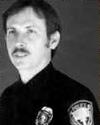
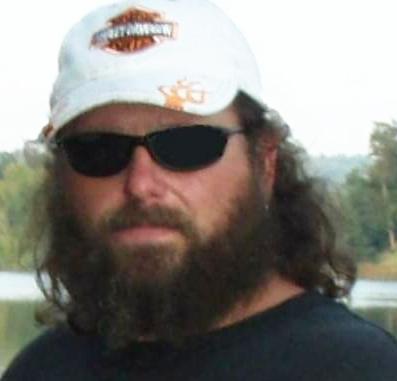
Gary Carrier Jr., a 44-year-old White/Caucasian man from South Charleston, West Virginia, was visiting friends on the night of August 10, 2003, when he stopped at a Go-Mart convenience store on Charleston’s West Side. Shortly before 11:30 p.m., Carrier was standing outside the store talking on a pay telephone when a single gunshot struck him in the head. The shot had apparently been fired from a considerable distance, and Carrier died at the scene. What initially appeared to be an isolated and baffling killing soon became the first in a series of shootings that frightened residents throughout the Kanawha Valley.
Carrier’s family described him as gentle and nonviolent. He had worked long days at Pendleton’s Charleston Tire shop for approximately five years and was known for using slow periods at work to repair lawn mowers, chain saws and other equipment brought to him by friends. He was divorced and had four children, and relatives said he enjoyed spending time with them.
One of his favorite possessions was a modified Chevrolet Camaro. His mother remembered that he disliked killing animals so much that he would not even hunt. Nothing publicly known about Carrier’s life immediately provided investigators with an obvious explanation for why someone would shoot him from a distance while he was simply making a telephone call.
Four nights later, the investigation changed dramatically. On August 14, Jeanie Patton was shot in the head while pumping gasoline at a Speedway station in Campbells Creek. Roughly an hour later, Okey Meadows Jr. was shot in the neck while making a purchase at the walk-up window of a Go-Mart in Cedar Grove. Like Carrier, both had been standing outside convenience stores when they were struck by single shots fired from a distance. The similarities immediately raised fears that the Charleston area was dealing with a sniper-style killer. Federal, state, county and municipal investigators formed a task force, canvassed neighborhoods, reviewed surveillance recordings and began pursuing hundreds of tips.
Ballistics testing ultimately provided the most significant connection. West Virginia authorities announced that the same. 22-caliber rifle had been used in all three killings. Investigators believed the shots had been fired from distances greater than 30 yards. Witnesses near two of the later crime scenes reported seeing a dark-colored extended-cab pickup truck, and police released a composite drawing of an individual seen in the area. At one point a deputy pursued a pickup resembling the vehicle being sought, but authorities said they had no evidence establishing that the truck involved in the pursuit was connected to the murders.
Investigators also examined whether the shootings were connected to the drug trade. Early in the inquiry, authorities received information about methamphetamine and other drug activity in the Campbells Creek area, but officials publicly acknowledged that they had not established that Carrier was involved with drugs or that a drug motive explained his death. The victims did not initially appear to know one another. By October 2003, with the killer still unidentified, a joint task force announced a $50,000 reward for information leading to the person responsible. The case nevertheless remained unsolved for years.
A major break finally came in 2011. Shawn Thomas Lester, who had been among the people examined during the long-running investigation, was arrested in late March and initially charged with the murder of Jeanie Patton. Authorities said information from witnesses helped revive the investigation. The case subsequently expanded, and Lester was indicted on felony charges that included three counts of first-degree murder covering the deaths of Patton, Meadows and Carrier. He pleaded not guilty and prepared to stand trial in Kanawha County.
Prosecutors developed a theory that the shootings were connected to the theft of drugs. They alleged that Patton’s common-law husband had stolen an engine block containing drugs associated with Lester and with a drug trafficker known as “Tito.” Prosecutors believed Patton was the victim for whom they had the strongest evidence. A ballistics report tied the rifle used to kill Patton to Lester, while prosecutors said ballistic evidence was essentially the principal evidence connecting Lester to Carrier and Meadows. One jailhouse witness also testified that Lester had described killing all three victims in retaliation for a drug theft, although Lester’s defense attacked that witness as an unreliable jailhouse informant. Lester publicly denied responsibility before the scheduled trial.
The prosecution also identified Rodney Shaffer Sr. as another person believed to have been involved. According to Charleston Police Lt. Steve Cooper, investigators interviewed Shaffer before his death in 2008, and Shaffer said that he had been inside the truck with Lester when Patton was killed. Cooper later stated that, had Shaffer still been alive, investigators believed he too would have faced a murder prosecution. Publicly available accounts, however, do not establish that Shaffer admitted participating in Carrier’s killing specifically.
Lester’s trial was scheduled to begin in July 2012, but a plea agreement was reached before jury selection. He pleaded guilty to second-degree murder in Patton’s death. In exchange, the remaining charges were dismissed, including the murder charges involving Carrier and Meadows. Kanawha County prosecutors openly acknowledged that they did not believe they possessed enough hard evidence to obtain convictions for those two killings. Prosecutor Mark Plants said investigators believed Lester was involved in the other deaths but could not prove those allegations to the standard required in court.
On August 31, 2012, Circuit Judge Duke Bloom sentenced Lester to the maximum 40-year prison term for Patton’s murder. Lester later received an additional consecutive six-year federal prison sentence for illegally possessing a firearm. Those federal charges concerned firearm possession years after the sniper shootings and did not constitute a conviction for Carrier’s death.
Although Lester was formally indicted for Carrier’s murder and prosecutors considered the three deaths part of the same sniper-style series, the charge involving Carrier was ultimately dismissed as part of the plea agreement. Consequently, no conviction was obtained specifically for the August 10, 2003 killing of Gary Carrier Jr. The investigation produced a suspect who was prosecuted and imprisoned for one of the three connected shootings, but Carrier’s death was never separately proven against Lester in court, leaving his family without a conviction specifically establishing criminal responsibility for his murder.