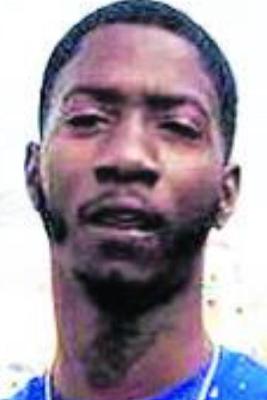
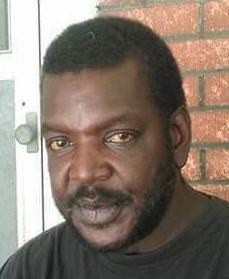
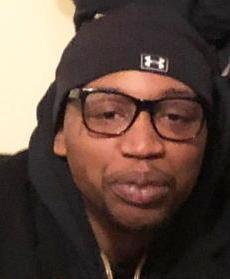
Joshua Boggess was a 25-year-old White/Caucasian male whose killing occurred near midnight on July 6, 2006, in downtown Charleston, West Virginia. Contemporary reporting described Boggess as a hardworking man who had been working at Chili’s in the Charleston Town Center and was apparently making his way toward his vehicle after leaving work. He was working two jobs in an effort to pay down debts, and he and his girlfriend were expecting a baby. What began as an ordinary walk through a downtown parking area turned into a fatal encounter with three teenagers who, according to later court records, had set out to rob him.
Near the ground level of the BB&T parking garage on Lee Street East, William James Bumpus, Ronald Hambleton and Daniel Botkin encountered Boggess while riding around Charleston with several other people. Bumpus was 16 at the time, while Hambleton and Botkin were also juveniles. The three got out of the vehicle and approached Boggess.
According to the West Virginia Supreme Court record, Bumpus asked Boggess what time it was and then demanded that he hand over his money while armed with a. 22-caliber handgun. Boggess resisted the attempted robbery rather than surrendering his property. Court records describe a confrontation in which Boggess struck Bumpus in the face, and one of Bumpus’s companions then struck Boggess.
The confrontation ended when Bumpus fired the handgun once into Boggess’s chest. Later court findings described the bullet as striking Boggess in the heart and killing him. Bumpus threw the handgun into bushes near the parking garage, and the three teenagers fled with the others in their vehicle, leaving Boggess at the scene. Police later recovered the weapon. Although some contemporary accounts placed the incident around midnight going into July 7, the later West Virginia Supreme Court decision specifically described the shooting as occurring near midnight on July 6.
The vehicle was being driven by Forrest Carter, who was accompanied by two female passengers in addition to Bumpus, Hambleton and Botkin. After Bumpus was dropped off at his home, Carter called 911. Police interviewed Carter at approximately 1:20 a.m. on July 7 and also questioned the two female passengers. Investigators moved quickly from those interviews to Bumpus. At approximately 3:52 a.m., officers went to his residence with a search warrant, took him to the police station, and by 4:26 a.m. advised him that he was under arrest for the shooting and read him his juvenile Miranda rights. Bumpus signed a waiver and gave an audio/video statement in which he admitted shooting Boggess with the. 22-caliber handgun he had been carrying in the waistband of his pants.
Bumpus was taken to magistrate court for a juvenile detention hearing shortly after 5:00 a.m. and ordered detained in a juvenile facility. Roughly eleven hours later, police arrested Hambleton and Botkin. Both gave statements that court records described as similar to Bumpus’s account. The investigation therefore developed rapidly from a seemingly random downtown shooting into a case against three juvenile defendants accused of participating together in an attempted armed robbery that resulted in Boggess’s death.
Prosecutors sought to have Bumpus prosecuted as an adult. On July 20, 2006, the state filed a motion to transfer his case to the criminal jurisdiction of Kanawha County Circuit Court on a first-degree murder charge. The court granted the transfer on August 14 after finding probable cause to believe Bumpus had committed first-degree murder. A grand jury subsequently indicted him on first-degree murder involving the use of a firearm and attempted first-degree robbery involving a firearm. Prosecutors pursued the killing under a theory that included felony murder because Boggess had been killed during the commission or attempted commission of a robbery.
Bumpus initially pleaded not guilty, and his case was scheduled for trial in December 2006. His attorneys challenged his statement to police and raised issues involving his transfer from juvenile court and the robbery charge. Before trial, however, prosecutors offered a plea agreement. Bumpus ultimately agreed to plead guilty to first-degree murder and first-degree robbery. The state agreed to recommend life imprisonment with mercy for the murder and a 40-year sentence for the robbery, with the sentences running concurrently. The court accepted his guilty pleas on November 30, 2006, and following a February 2007 sentencing hearing imposed the recommended punishment. The designation of “with mercy” made Bumpus eligible eventually to seek parole rather than requiring him to spend the remainder of his life in prison without that possibility.
Hambleton and Botkin also faced serious criminal consequences for their participation. Hambleton, who was 15 when Boggess was killed, pleaded guilty as an adult on November 29, 2006, to second-degree murder and first-degree robbery. He received a determinate 40-year prison sentence. Court records emphasized that Hambleton admitted punching Boggess during the struggle before a co-conspirator shot him. Hambleton was initially handled as a youthful offender and housed at the Salem Industrial Home for Youth before eventually being transferred to the adult correctional system. He later sought a reduction of his sentence, arguing in part that his rehabilitation and educational accomplishments justified reconsideration, but the Kanawha County Circuit Court declined to reduce the sentence. The West Virginia Supreme Court affirmed that decision in 2015, finding that the punishment was within statutory limits and justified by the severity of the robbery and killing.
Botkin likewise entered a guilty plea to second-degree murder and first-degree robbery. Records from Bumpus’s later court proceedings indicate that the two codefendants had negotiated plea agreements recommending 40-year sentences to run concurrently on their murder and robbery charges. By 2015, Botkin remained incarcerated, and reporting concerning the case stated that he had become eligible for parole in 2016.
Bumpus continued challenging his convictions years afterward through post-conviction litigation. He argued, among other things, that his confession had been improperly obtained, that his transfer into adult court was defective, that his guilty plea was involuntary, that punishing him for both murder and robbery raised double-jeopardy concerns, and that his attorney had provided ineffective assistance. The Kanawha County Circuit Court rejected those arguments in 2019. In September 2020, the Supreme Court of Appeals of West Virginia affirmed that ruling, finding no reversible error and leaving his convictions and sentences intact. The court’s findings continued to identify Bumpus as the person who fired the fatal shot during the attempted robbery of Boggess.
The case ultimately resulted in convictions for all three teenagers who confronted Boggess that night. Bumpus was convicted of first-degree murder and first-degree robbery and received life with mercy plus a concurrent 40-year robbery sentence; Hambleton and Botkin were convicted through guilty pleas of second-degree murder and first-degree robbery and received lengthy prison terms. What investigators determined had been an effort to find someone to rob ended with Boggess fatally shot in a parking garage, the weapon discarded nearby, and three young offenders arrested within hours and ultimately held criminally responsible for his death.