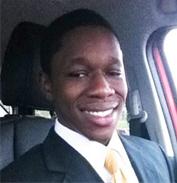
On the cold winter night of December 8, 2019, a young Black man named Dennis Allen Paige, who was 21 years old, was walking home from his job in Hamden, Connecticut. His journey was tragically cut short just moments from his doorstep. In the early morning hours, around 12:25 a.m., he was approached by several individuals with the intent to rob him. As he tried to flee, a single, fatal shot was fired, striking him in the upper back.
First responders found him lying on Whiting Street and rushed him to Yale New Haven Hospital, but he was pronounced dead.
For more than four years, the case of who killed Dennis Allen Paige remained unsolved, leaving his family in a state of prolonged grief and fear. The Hamden Police Department's Major Crimes Unit continued to investigate, and a reward for information leading to an arrest and conviction was eventually increased to $50,000. His family pleaded with the public for any information that could help bring justice for their loved one, who they described as a young man any parent would be proud of and the youngest of nine siblings. The investigation hinged on solving a senseless act of violence that had stolen a son and brother from his family just weeks before his 22nd birthday.
A significant breakthrough in the cold case came in the spring of 2024. After a lengthy investigation that involved the Hamden Police, New Haven Police, and the Connecticut State Police Crime Lab, two New Haven men were arrested in connection with the homicide. The arrests were the result of crucial evidence, including a confession from one of the inmates and DNA evidence that linked a suspect to the crime.
The suspects were identified as Darrelle McFadden, 31, and Patrick Ratliffe-Jones, 29. Both men were charged with felony murder and conspiracy to commit first-degree robbery. According to the arrest warrants, McFadden confessed to his involvement in the robbery and implicated Ratliffe-Jones as the one who fired the fatal shot as Paige tried to run. The arrests brought a sense of relief to Dennis's family, who, after more than four years of uncertainty, could finally begin to feel a sense of justice for his untimely death.