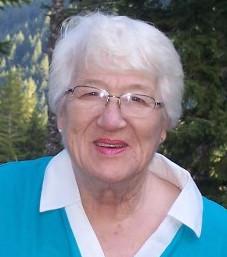
On December 25, 1936, in the company town of McNary in Apache County, Arizona, Creacy Mae Millard, a 29-year-old African American woman, was shot to death on the main street near the Mitchell Cafe. Court records describe her and her partner, Ernest Patten as a couple who had been living together and were preparing to marry. Earlier that day she had gone to visit her brother in McNary, learned he was ill and needed beef tallow, and rode with friends—including a man named Curtis McLemore—to
nearby Pinetop in McLemore's car to obtain it. When they returned, McLemore parked in front of the Mitchell Cafe, and he and Creacy remained seated in the car.
While the car was stopped on McNary's main street, Patten came upon them. Contemporary accounts and later summaries say he regarded Millard as his sweetheart and was angered to find her in a car with another man. He approached the vehicle, exchanged a few words with her, then stepped to within a couple of feet of where she sat and fired repeatedly with a revolver, sending three bullets into her body and another shot into McLemore, who survived his wound. In his statement to the court, Patten said he killed Creacy out of jealousy, and he told the arresting officer, when asked why he had done it, “I am mad,” underscoring that investigators and the courts viewed the attack as an impulsive act driven by rage and possessiveness rather than a premeditated ambush of multiple people.
Patten was taken into custody the same day and quickly emerged as the sole suspect. He was formally charged with first-degree murder for the killing of Creacy and brought before the court in Apache County the next day. When arraigned, he was informed of his right to counsel; the judge appointed an attorney for him and delayed proceedings, but Patten repeatedly insisted that he wished to plead guilty. On December 30, 1936, in open court with counsel present, he entered a guilty plea to first-degree murder after acknowledging that he understood the court could sentence him either to life imprisonment or death. The judge then held a special hearing on December 31 to take testimony from eyewitnesses and from Patten himself, building an official record of how Millard had been shot in and around the parked car in front of the Mitchell Cafe. That hearing produced no conflicting version of events; the narrative of Patten as the lone gunman, acting out of jealousy, was consistent across the witnesses and his own statements.
On January 4, 1937, the trial judge, after stressing the gravity of taking a human life and the care with which he had reviewed the evidence, chose the death penalty rather than life imprisonment. Patten appealed, but the Arizona Supreme Court upheld the sentence, concluding that the trial court had acted within its discretion in imposing death on a defendant who had knowingly pleaded guilty to first-degree murder after a jealous shooting that also wounded another man. In the months that followed, Patten sought clemency from the Arizona Board of Pardons and Paroles, but news accounts and later historical compilations note that his request for commutation was denied.
The case ended with Patten's execution in the state gas chamber at the Arizona State Prison in Florence in the early hours of August 13, 1937. Records of Arizona executions and contemporary newspaper reports state that he was 37 years old at the time and that he died alongside another condemned man, Bert Anderson, in a double execution carried out just after 4 a.m. The Espy capital punishment archive and pre-1972 Arizona execution lists identify his victim simply as a Black female common-law wife, matching the court's description of his relationship with Creacy and confirming that the state regarded him as solely responsible for her death; no other suspects or arrests are mentioned in the legal opinions, execution registers, or later historical summaries of the case.