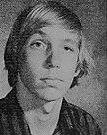
Robert Robbins was living in the Phoenix, Arizona area in the fall of 1973, sharing a trailer in the Apache Junction area outside the city with his girlfriend, Katherine Mestites, as the couple tried to build a life together on the outskirts of Phoenix. Robbins, a 19-year-old White/Caucasian male, had recently completed service as a U.S. Army veteran of the Vietnam War, and friends later described him as a young man settling back into civilian life when he crossed paths with two drifters,
Douglas Edward Gretzler and Willie Luther “Bill” Steelman, whose brief stay in Arizona would leave a devastating trail of violence.
Gretzler and Steelman had arrived in Arizona in October 1973 with a teenage girl, Marsha Renslow, traveling from Denver partly so Renslow could reconnect with her friend Mestites. After reaching Phoenix, they tracked down Mestites, learning she was living with Robbins in a trailer park near Apache Junction. In the days that followed, the group drank, used drugs, and moved in and out of the trailer as the two men committed robberies and, soon, murders elsewhere—most notably the abduction and killing of Kenneth Unrein and Michael Adshade, two young men they forced at gunpoint into a van and murdered in rural California. Gretzler and Steelman became increasingly anxious that Robbins and Mestites could connect them to these disappearances if police started asking questions, and that fear began to focus their attention on the quiet couple in the trailer.
On October 23, Robbins drove Mestites to her job at the Playful Kitten massage parlor in Phoenix, leaving Gretzler and Steelman alone at the trailer, where they murdered another young man, hitchhiker Steven Allan Loughran, in a remote gully near the Superstition Mountains. The next day, October 24, Steelman argued that they now had to eliminate Robbins as a potential witness who might suspect their role in the disappearances of Unrein and Adshade. The two agreed on a plan to kill him while Mestites was at work. According to Gretzler’s later confession, after sundown that evening Robbins walked into the living room of his own apartment, unaware of what was coming, when Gretzler slipped an electrical cord around his neck from behind and strangled him. Once Robbins collapsed, they shot him once in the head to make sure he was dead, then hid his body under a mattress in the bedroom. When Steelman later picked up Mestites from work, he lied that Robbins had been “driven out of town for a few days,” even as her partner’s body was concealed in the next room.
In the hours and days after the killing, the two men continued using Robbins’ car and belongings as if nothing had happened. The following morning they drove Mestites to a local store in his Chevrolet convertible, while she talked about feeling relieved that “Ken and Bob” were out of her life and mentioned plans to use cocaine and seek some kind of spiritual guidance about her future. That evening, when she refused to go back to work and instead stayed at the trailer performing a séance at a small altar she had built, Steelman walked up behind her and shot her once in the head, killing her in what investigators later described as an execution-style attack. With Robbins’ body still hidden under the mattress and Mestites now dead on the floor, Gretzler and Steelman left the trailer, abandoned Robbins’ car days later, and headed on to Tucson and then California, where they would commit several more murders. The bodies of Robbins and Mestites were not discovered until October 28, when friends and neighbors, alarmed that neither had been seen in days, alerted authorities and police conducted a welfare check at the trailer.
Within 24 hours of the discovery, detectives began piecing together who had last been staying with the couple. Neighbors and acquaintances told investigators that two men known only as “Bill” and “Doug” had been living in the trailer with Robbins and Mestites and had abruptly left in the early hours of October 26. Another name, “Marsha from Denver,” surfaced as someone who had also stayed there but left about a week earlier. One witness, Monique Jered, recalled that “Bill” had said he was from California, while “Doug” spoke with a distinct New York accent and that the pair had mentioned plans to head to San Francisco. When police tracked down Marsha Renslow, she initially refused to cooperate, but after being confronted with Polaroid crime scene photographs of the bloated bodies of Robbins and Mestites, she broke down and identified “Bill” as Willie Steelman and “Doug” as Douglas Gretzler. She also detailed the robberies, car thefts, and motel stays the pair had engaged in across Arizona and California, leading investigators to a motel receipt dated October 16 that carried Gretzler’s name and a Bronx address—evidence strong enough for Arizona authorities to issue warrants for their arrest on robbery and fraud charges on November 1, and to formally link them to the murders at the Apache Junction trailer.
As investigators in Arizona and California compared notes, they tied the same two men to a widening series of crimes that included the murders of Unrein and Adshade, the hitchhiker Loughran, University of Arizona student Gilbert Sierra, Tucson couple Michael and Patricia Sandberg, and finally nine victims—members of the Parkin and Earl families and their houseguest—massacred in a home near Victor, California. After the Orchard Road killings in California, Tucson detective David Arrelanes obtained updated arrest warrants for Gretzler and Steelman in connection with the “two recent killings in Phoenix,” referring to Robbins and Mestites, and relayed those warrants and a booking photo of Steelman to California authorities. On November 8, 1973, police tracked the pair to Sacramento, where Gretzler was arrested outside his hotel room after trying briefly to flee inside the building, telling officers, “Man, I’m glad this is over. I’ve seen enough killing, and man, I don’t wanna see any more,” before giving up Steelman’s location. Steelman surrendered a short time later after a tense standoff at an acquaintance’s apartment.
In the days following their arrests, both men confessed in detail to a total of 17 murders, placing the killing of Robert Robbins on October 24, 1973, squarely within their tightly documented three-week spree. California prosecuted them first for the nine Orchard Road murders, resulting in life sentences for each. Afterward, they were extradited to Arizona, where they were tried separately for murders committed there and ultimately sentenced to death for two of the Arizona killings; Arizona officials had initially sought to try them first for the Robbins and Mestites murders, but ultimately focused their capital cases on other victims in the state as part of a broader prosecution strategy. Gretzler was executed by lethal injection in 1998, while Steelman died in prison in 1986 from cirrhosis while still on death row. By the time those sentences were carried out, investigators considered the murder of Robert Robbins solved: there were no other credible suspects beyond Gretzler and Steelman, whose confessions, physical evidence, and consistent witness identifications firmly established them as the perpetrators of the crime that ended the young Phoenix resident’s life.