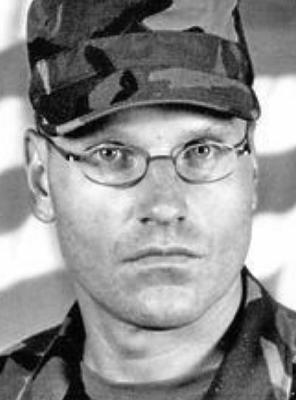
Richard Monroe “Dick” Giles was a professional gambler based in Phoenix, Arizona. At the time of his death he was a 42-year-old white male, born in Texas in 1892 and later buried in the City of Mesa Cemetery after his killing in early 1935. Contemporary records place his death on January 2, 1935, in Phoenix, where he was shot and killed, and later memorialized as a victim of gun violence from that date and place.
Shortly before the murder, Giles spent the evening at a poker game held at a club, consistent with his life as a gambler. An historical poker timeline notes that on January 2, 1935, “gambler Dick Giles” was murdered in Arizona after leaving a poker game at a club, indicating that he was targeted as he departed a gambling venue where significant sums of money were in play. The implication from later court summaries and historical notes is that Giles was known to carry or have access to substantial cash from such games, making him an attractive target for robbers who were familiar with Phoenix's gambling circles.
The investigation quickly focused on a small group of men who had learned there would be money in Giles's game. Court and secondary summaries describe Roland H. “Jerry” Cochrane, along with Otis M. Phillips and Horace Hunter, discussing a plan to “hi-jack” the poker game and rob Giles of the money involved. They conferred privately, weighing how much cash Giles was likely to have and whether he would be armed, and arranged for Hunter to use his relationship with Giles to get the gambler into a vulnerable situation. Hunter loaned his automobile to Phillips and Cochrane and agreed that he would bring Giles to his home so that Cochrane could carry out the robbery there, showing that the killing grew out of a deliberate, coordinated plan rather than a spontaneous confrontation.
According to the Arizona Supreme Court's later summary of the case, the critical events unfolded on or about the night of January 2–3, 1935. Cochrane, with Phillips and Hunter acting as co-participants, attempted to rob Giles. During the course of that robbery attempt, Cochrane confronted the gambler, demanded money, and then shot him, inflicting the gunshot wounds that caused Giles's death. Cochrane subsequently confessed, giving a statement that not only admitted his own role but also implicated Phillips and Hunter in planning and facilitating the crime. The confession, combined with witness testimony about the robbery plot and the movements of the men around the time of the shooting, formed the backbone of the state's case.
As to suspects and arrests, the record is clear that Roland H. Cochrane was the principal gunman and the central defendant. He was charged in Maricopa County with first-degree murder for killing Giles during a robbery, tried in February 1935, convicted, and sentenced to death; the Arizona Supreme Court later upheld his conviction and sentence on appeal. A statewide execution list shows that Cochrane, a 28-year-old white man, was executed by lethal gas on October 2, 1936 in connection with a “murder-robbery” whose victim is explicitly identified as Richard Giles, also recorded as white, confirming both the outcome of the case and the official view that Giles died in the course of a robbery.
Co-defendants Otis M. Phillips and Horace Hunter were also treated by authorities as suspects and participants. The charging documents named them alongside Cochrane as principals in the murder, and appellate opinions describe Hunter's role as one of advising, aiding, counseling, and encouraging the killing by helping to set up the robbery and providing his car and home as part of the plan. Hunter's conviction for his part in the murder was later affirmed by the Arizona Supreme Court, which emphasized that under Arizona law, someone who plans and facilitates a killing may be treated as a principal even if he does not personally pull the trigger. Phillips is repeatedly referenced in the same records as a co-defendant and co-conspirator in the attempted robbery, indicating that he too was arrested and prosecuted in connection with Giles's death, though the appellate material focuses primarily on Cochrane's capital conviction and Hunter's role as planner rather than on Phillips's final sentence.