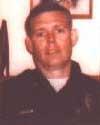
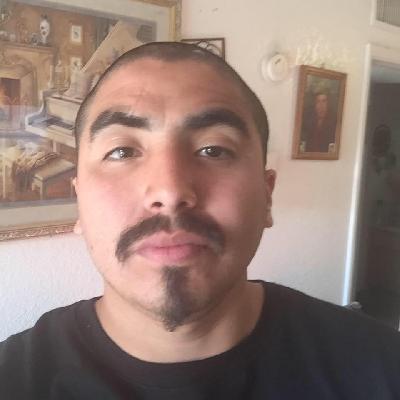
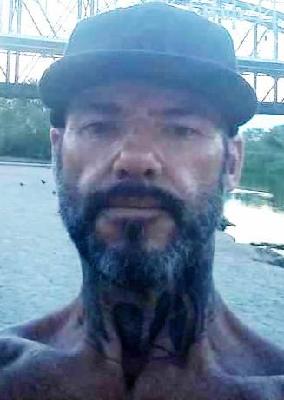
Gary Alan Maas, a 29-year-old White male patrolman with the Yuma Police Department, had grown up far from the desert in Wisconsin and served in the United States Marine Corps before moving to Arizona, where he had spent six years in uniform protecting the border community of Yuma. Colleagues remembered him as a hard-working officer with a quick sense of humor, and at home he was a father whose children Jason and Stephanie knew him as the dad who cheered from the sidelines at their games.
His family life was complicated but full: he was separated from the mother of his two older children and engaged to a new partner who was pregnant with a daughter he would never meet.
On April 9, 1986, what began as a small worry on a Greyhound bus set the final events of his life in motion. During a run from El Centro, California, toward Yuma, passengers noticed troubling behavior from two young men on board. After one of them used the bus restroom, a bullet was found there, and the concerned driver reported the discovery at a border inspection station on the way into Arizona, asking that police meet the bus at its next stop. Patrolman Maas was dispatched to check on the disturbance, a call that sounded more like precaution than emergency: a suspicious bullet, possible armed passenger, nothing more than a situation to be sorted out at the terminal.
By the time he reached the Greyhound depot in downtown Yuma, the bus had already arrived and its riders were dispersing into the spring evening. Among them were 28-year-old twin brothers Edward Neil Smith and Donald Smith, who had stepped off the bus and lingered near the station—one using a telephone, the other nearby—apparently trying to blend in with the travelers coming and going. Maas approached, identified himself, and asked about the disturbance on the bus. When he moved to frisk Edward for weapons, the encounter turned violent. Witnesses later told a jury that a struggle broke out, with the officer initially getting the upper hand and forcing Edward to the ground, only for the situation to reverse in the chaos. Some said Edward began firing into the fallen officer; others recalled Donald stepping in and unleashing the shots. What everyone agreed on was the violence of those seconds: gunfire erupting at close range, the patrolman hit repeatedly, yet somehow still managing to draw his own weapon and return fire, fatally striking Donald even as he himself was mortally wounded. Moments later, Gary Maas lay dying on the pavement of the depot he had been sent to secure.
The twin who survived, Edward, bolted from the scene as bystanders scrambled for cover and police converged on the bus station. News of the shooting traveled quickly through Yuma, where many residents knew Maas from calls, traffic stops, or community events. For the Yuma Police Department, the loss was historic and devastating: he was the first officer in the agency’s history to be killed in the line of duty, a stark reminder that even a seemingly simple disturbance call could become a life-and-death confrontation without warning.
Edward did not get far. A multi-state search was launched, helped by the fact that he and his brother were already on law enforcement’s radar. At the time of the bus-station shootout, the twins were wanted as murder suspects in Idaho, connected to the killing of a young man whose body had been found in a car near Cascade, and Texas authorities were seeking them on attempted-murder charges stemming from a gas-station holdup in Arlington in which a clerk had been shot at and wounded. Within a week of Maas’s death, investigators traced Edward to Oklahoma, where he was arrested and returned to Arizona to face charges.
In Yuma County, prosecutors built a case that wove together the bullet found on the bus, witness accounts from passengers and depot bystanders, and the trail of the brothers’ flight from earlier crimes. A grand jury indicted Edward Neil Smith on three counts: first-degree murder for the killing of Officer Maas, first-degree murder for the death of his twin Donald—who had been shot by Maas during the gun battle—and first-degree escape, based on his violent attempt to break away from lawful detention during the encounter. At trial, the jury was instructed on both premeditated and felony-murder theories in the killing of Maas and on felony murder for the death of Donald. After hearing how the arrest attempt at the depot had escalated into a struggle and then into an exchange of gunfire, jurors found Edward guilty of felony murder for both deaths and of escape, while acquitting him of premeditated murder in Maas’s killing. He received life sentences for the two murder convictions along with a separate prison term for escape, and records compiled years later for a Wisconsin law-enforcement memorial noted that as of 2022 he remained incarcerated, serving out those punishments for the bus-station shooting that had claimed the Yuma officer’s life.
For Maas’s family, the legal outcome could not repair the tear left by that April night. His death left Jason and Stephanie without the father who had once stood beside Little League fields and youth football sidelines in Yuma, and his fiancée carried to term the daughter, Letty or Leticia, whom he never had the chance to hold. Decades later, Jason would speak publicly about how losing his father at ten years old shaped him, describing how the memory of a hardworking, driven police officer in southwest Arizona became a kind of compass as he built his own career in football and eventually rose to become a head coach in the Canadian Football League. In Yuma, the police department keeps Maas’s memory close: his name and photograph appear on the city’s fallen-officer memorial, and each anniversary of April 9 brings brief ceremonies and social-media tributes that recall the day a routine call to a Greyhound depot ended in gunfire, a suspect’s flight, an arrest across state lines, and the enduring absence of an officer who never came home from work.