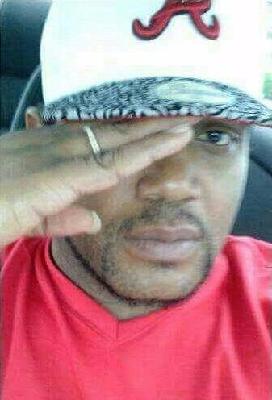
Brandy Brown, a 27-year-old Black man from Atlanta, Georgia, died on July 30, 2009, and what remains in the public picture of his case is as painful as it is haunting. His death stands not only as the loss of a young life, but as the beginning of a silence that seems to have stretched for years afterward. There is a particular kind of sorrow that settles over cases like this, where a person’s name survives in the record, but so many of the moments that made up his life, his personality, his routines, and the people who loved him remain outside the public view. That absence makes the tragedy feel even heavier. It leaves behind the outline of a human being without the full story he deserved to have told.
The known details suggest that Brandy Brown’s killing became one of those cases that entered official records but never truly left the shadows. There is no widely available public account that fully explains what happened in the hours before his death, where exactly the violence unfolded, or what chain of events led to his life being cut short. That gap is devastating in its own way. It means that instead of a clear narrative, what lingers is uncertainty, and uncertainty can be one of the cruelest burdens left behind after a violent death. For the people who knew him, that kind of unanswered loss does not simply fade with time. It deepens. It changes shape. It becomes part grief, part memory, and part unanswered question.
What also appears from the available information is that there have been no publicly identified suspects, no announced arrests, no charges, and no courtroom resolution tied to Brandy Brown’s death. The case appears to remain unresolved, which gives his story an especially painful stillness. In many homicide cases, there is at least some public turning point, an arrest, a named suspect, a trial, a verdict, something that suggests movement toward accountability. Here, there is only the hard reality that a young man died violently and the world was left without the answers that should have followed. That lack of resolution does not just leave a case open. It leaves a wound open.
There is something especially heartbreaking about a life being reduced in the public eye to a few basic facts: a name, an age, a city, a date of death. Behind those facts was a real person who occupied space in this world, who mattered to somebody, who had a voice, a presence, habits, memories, and relationships that cannot be measured by a case entry. Even when the public record is sparse, the loss itself is not small. It never was. Brandy Brown was not just the subject of an unsolved homicide. He was a person whose death created an absence that others had to carry.
Cases like his often leave behind more than unanswered investigative questions. They leave families and friends trapped between mourning and waiting, between trying to honor the life that was lived and trying to understand the violence that ended it. When there are no public breakthroughs, no announced suspects, and no clear sense that justice is moving forward, the passage of time can feel unbearably cruel. Each year that passes can make the silence feel louder, not quieter. And yet, even in that silence, his name remains. That matters. Because remembering him means refusing to let the case become just another forgotten file.
In the end, Brandy Brown’s story, as it is publicly known, is one marked by loss, unanswered questions, and the ache of a homicide that appears to have gone unsolved. The facts that have surfaced may be limited, but the human tragedy is not. A 27-year-old man from Atlanta died on July 30, 2009, and the absence of arrests or named suspects only deepens the sadness surrounding his death. What remains is the sense of a life interrupted, a family left without clarity, and a case that still seems to be waiting for the justice and truth that should have come long ago.