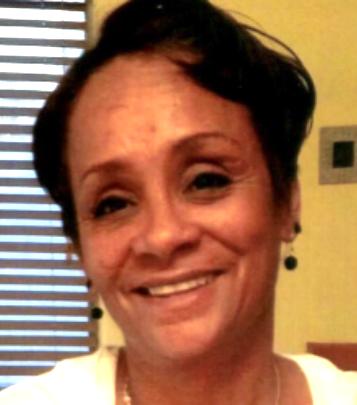
Anissa Antunez was a 22-year-old woman in Phoenix, Arizona, whose name now lives on in the quiet corners of homicide databases and victim-advocacy newsletters instead of in the ordinary paperwork of a young life. Public records connect her to the full name “Anissa Noel Antunez” and list her as female, with a date of birth in late September 1994, placing her in her early twenties when her life was cut short.
On June 9, 2017, her killing was reported to police at an address in west Phoenix: 3001 West Glenrosa Avenue, a residential stretch in the 85017 ZIP code. In the Project Cold Case database, which compiles information from law-enforcement agencies and a Washington Post investigation into unsolved murders, her entry is stark: name, date reported, an offense listed simply as “murder,” a cause of death recorded as “unknown,” and an incident location that fixes the tragedy to that single Phoenix block. The case is labeled “unsolved,” and the suspect field reads “name unknown,” emphasizing how little has ever been released publicly about exactly what happened to her that day or night.
The official summary offers no narrative of the moments before her death—no hint of whether she was inside a home, on the street, alone or with others. It does, however, anchor the responsibility for the investigation with the Phoenix Police Department, listing that agency as the lead law-enforcement authority and giving the city's main police phone number as the point of contact for anyone who might know more. The way the record is structured makes clear that Anissa's death is treated as a criminal homicide rather than an accident or natural loss, but beyond that, the public case file remains a thin outline with many of its most important lines still missing.
Years later, her name surfaces not in police press releases announcing breakthroughs, but in the materials of Families & Friends of Murder Victims, Inc. In a June 2018 newsletter, Anissa is listed among the people remembered that month, a brief mention that nonetheless confirms she is counted among those lost to murder and that her family or supporters are connected to a wider community of survivors seeking support and justice. In later memorial listings, such as “Heavenly Birthdays” compiled for October 2025, her name appears again, suggesting that those who loved her continue to mark her milestones even as the formal investigation stalls.
Across all of these public records, there is a striking silence where answers about accountability would normally be. No suspect has been publicly identified in connection with Anissa Antunez's killing, and there are no reports of anyone being arrested or charged in her case. Databases that summarize the investigation repeat that the suspect is unknown and the case remains unsolved, reinforcing that whatever work continues is happening out of public view, with no named person held responsible.
The picture that emerges is therefore hauntingly incomplete: a young woman, identified only by her name, age, and city, whose death was serious enough to be cataloged as murder, whose case persists in an unsolved-homicide database drawn from Phoenix police files and national reporting, and whose memory is kept alive by victim-advocacy groups long after the date her killing was first recorded. What is known can be read in a few spare lines; what is not known—who did this, why it happened, and what her final hours were like—still hangs over 3001 West Glenrosa Avenue as an unanswered question.