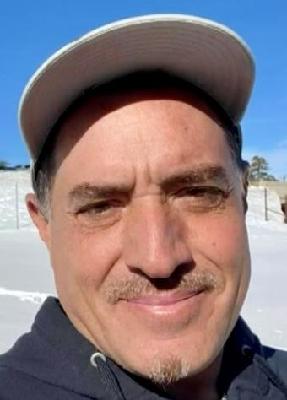
Elvis Iradukunda was identified in public records as a homicide victim in Phoenix, Arizona, with his body found and his death officially recorded on September 14, 2017. Available case listings describe his manner of death broadly as “Death by Force,” indicating that investigators consider his death the result of intentional violence rather than accident or natural causes.
These records place the incident within the city of Phoenix but do not publicly specify the exact neighborhood or setting where he was discovered. Age is not reported in available records, which describe him only as a male of unspecified race or ethnicity, leaving basic personal details about his background largely absent from the public narrative of the case.
The case appears today in multiple online cold-case and crime-mapping databases as an unsolved homicide. A homicide entry for Elvis Iradukunda lists the Phoenix Police Department as the investigating agency and classifies the cause of death simply as “murder,” without elaborating on the specific weapon, type of assault, or any events that immediately preceded his killing. These databases confirm that his death has not been reclassified or closed and continues to be treated as a criminal act for which no one has yet been held publicly accountable. The fact that his name appears in “area cold cases” sections underscores that, years later, his killing remains unresolved and still open for information from the public.
Beyond those bare facts, online sources provide almost no further detail about Elvis’s life, the circumstances of the crime, or what might have placed him in harm’s way on the day he died. There are no widely available news articles that reconstruct the final hours before he was found, no publicly described crime scene narrative, and no official summary of evidence such as surveillance footage, vehicle descriptions, or witness statements. The listings do not specify whether he was attacked in a residence, outdoors, or in a vehicle, nor do they indicate whether he was alone or with others when the fatal violence occurred.
Crucially, none of the public databases or case summaries name any suspect or person of interest in connection with Elvis Iradukunda’s homicide, and there is no record of an arrest specifically tied to his death. The entries instead route readers back to the Phoenix Police Department for more information, a common pattern in unsolved cases where the investigating agency retains the full case file while only minimal details are shared publicly. As a result, the story of Elvis’s death, at least in the public record, is defined less by a detailed account of what happened than by the stark fact that a man was violently killed in Phoenix on September 14, 2017—and that, to this day, whoever is responsible has not been identified in publicly accessible sources.