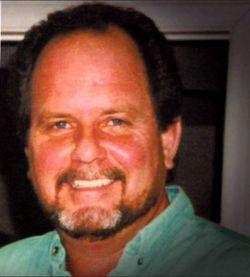
Spencer Frazier, a 40-year-old man, was killed by gunfire on February 20, 1960, in Phoenix, Arizona. His name now appears in victim registries of gun violence, which record only the barest facts: his age, the city where he died, and the date his life ended alongside that of another man, Ira Lee Hardison, during a sudden outbreak of lethal violence in the city.
Behind those brief entries lay an encounter with a teenage gunman moving rapidly across the American Southwest, choosing middle-aged men in working settings as targets during a string of robberies that would ultimately span three states.
Earlier that month, a youth named Dennis Manaford Whitney had already begun a violent journey. In Victorville, California, he entered a gas station during a holdup and shot attendant Jim Ryan to death, then headed east toward Arizona. By February 20 he was in Phoenix, where, according to later reconstructions of the spree, he shot and killed 55-year-old Ira Lee Hardison and, hours apart, Spencer Frazier, turning an ordinary winter day into one linked forever with a multi-state murder rampage. After killing Frazier, Whitney took Frazier’s car, using it as a way to push his flight farther across the desert and away from the scene of the shootings.
The stolen car carried the teenager south to Tucson, but it did not take him far enough. When the vehicle broke down there the next day, Whitney resorted to yet another robbery, this time at a gas station where he shot and killed attendant Glen B. Smith before fleeing with a small amount of money. From Arizona he hitchhiked across the country to Miami, Florida, continuing the pattern of armed holdups and shootings. Within days he had murdered two more filling-station workers, Ken Mezzarno and Arthur Keeler, and attacked others, including at least one victim who survived and later provided a description of the red-haired youth who was terrorizing service stations along his path. Each new crime retroactively cast a longer shadow over the brief Phoenix entries that carried Frazier’s name, placing his killing firmly within a chain of connected deaths rather than as an isolated local homicide.
Whitney’s spree ended not in Arizona but in Florida. After the final sequence of murders and an abduction in the Miami area, he was arrested on March 5, 1960. In custody he admitted to the killings in Florida and also to the murders he had committed earlier in California and Arizona, a confession that folded the shootings of Frazier and Hardison in Phoenix and the other southwestern victims into a single, coherent case. Whitney was ultimately tried in Florida, where he was convicted of first-degree murder in connection with two of his later victims and sentenced to death, a sentence that was automatically imposed when the jury did not recommend mercy. In 1972, after changes in death-penalty law, his sentence was commuted to life imprisonment; he remained incarcerated until his death in 2005, leaving no indication in the record that anyone other than he was ever considered responsible for the Phoenix shootings that claimed Frazier’s life.
Little is preserved in public sources about who Spencer Frazier was outside of the night he crossed paths with the fleeing gunman, but fragments of his story appear where victims’ names and dates are gathered so they are not lost entirely. Memorial listings note his death in Phoenix on February 20, 1960, alongside other gun-homicide victims from that day, and cemetery records place a man of his name and dates buried at Twin Buttes Cemetery in Tempe, an indigent burial ground that served Maricopa County for decades. In these brief lines, his role in a widely reported interstate crime spree is reduced to a date and a name, yet they also mark the point at which a 17-year-old robber’s path of escalating violence intersected with an ordinary life in Phoenix, turning a routine day into the moment that defined how history would remember Spencer Frazier.