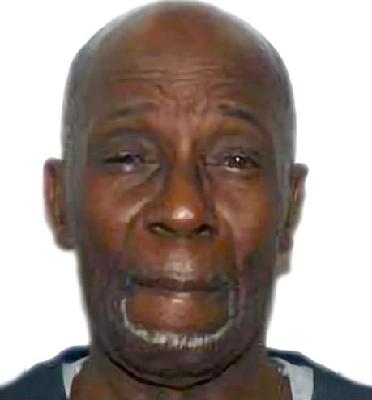
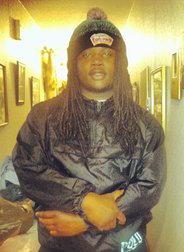
Do you know who murdered David Cobb Jr? David Antonio Cobb Jr., a 19-year-old African-American man from Washington, D.C., stepped into the humid stillness of the early morning on Wednesday, July 31, 2002, unaware that his life was approaching its final hour. In the 800 block of Maryland Avenue NE, where rowhouses and city lights framed the quiet street, the day had barely begun when the calm was broken.
A burst of gunfire cut through the darkness, shattering the fragile peace of that corner of the city and drawing attention to a young life about to be lost.
Shortly after 1:30 a.m., emergency calls brought police officers rushing to the scene. At approximately 1:37 a.m., they arrived on Maryland Avenue NE and found David suffering from gunshot wounds. The block that moments earlier had been just another stretch of pavement in the nation's capital was suddenly transformed into a crime scene, illuminated by flashing lights and the hurried movements of first responders. Despite efforts to save him, the injuries were too severe, and he succumbed, his life ending in the same early-morning hours in which the shooting began. What remained were shell casings, a shaken neighborhood, and the unanswered question of who had pulled the trigger and why.
In the days that followed, his name appeared not in the happy milestones of a young adulthood but in an obituary notice, formally identifying him as David Antonio Cobb Jr. of Washington, D.C. The notice spoke of roles that statistics and police reports cannot capture: he was a devoted father to his child, Deziray, and the son of David Antonio Cobb Sr. and Ena Victoria Clark. It also named his stepfather, Charles L. Newsome, and his sister, Ena E. Cobb-Fleming, along with a niece, a nephew, and a wider circle of relatives and friends left to carry his memory. Those brief lines hinted at the gatherings that must have followed—family coming together in grief, telling stories about him, trying to reconcile the ordinary rhythms of his life with the sudden, violent way it ended.
For detectives, the shooting was immediately treated as a homicide, and the case was taken up by the Metropolitan Police Department. A formal flyer was produced, summarizing the bare facts: the date and time, the 800 block of Maryland Avenue NE as the location, and the stark statement that David had been shot and killed. The department emphasized that the case was under active investigation and that they needed the public's help. As with many killings in the District, a reward of up to $25,000 was offered for information leading to the arrest and conviction of whoever was responsible, whether one person or several. That reward, prominently advertised, underscored how little investigators had to work with and how crucial even a small lead could be.
Years passed, but the official descriptions of the case did not change in the way a solved killing would. Public records continued to list David's death as an unsolved homicide, and appeals for information remained active, reflecting that no arrest had been announced and no suspect publicly named in connection with his killing. His case became one of many lingering questions in Washington, D.C.—a file that remains open, a reward still on offer, and a family whose loss is permanently fixed to a date and time in 2002. On paper, the story is summarized in a few lines about a shooting in the early-morning hours on Maryland Avenue NE. In reality, it is the story of a young father whose life ended on a quiet city block, of loved ones who had to say goodbye too soon, and of a city still waiting for someone to come forward with the truth about what happened that night.