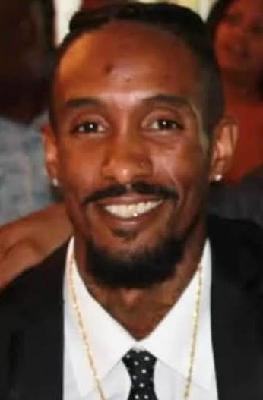
Do you know who murdered Raven Carroll? Raven Darnell “Ray” Carroll, a 43-year-old African-American man from the small community of Adamstown in Frederick County, Maryland, was known in public records and family remembrances as a devoted husband, father and son whose life connected rural Maryland to the streets of Washington, D.C. Obituary notices later recorded him as the loving husband of Cynthia Carroll, father of Taressa Raven Carroll, and the son of Randolph Puller and Cornelia Dickerson, surrounded by brothers, sisters,
cousins and friends who would go on to write about how deeply they missed him after he was gone.
On the night of Saturday, March 8, 2003, Carroll found himself in Southeast Washington, in the 400 block of Condon Terrace SE, when the quiet of late evening was shattered by gunfire. Around 10 p.m., police were called to the block; The Washington Post later reported that officers discovered him lying there with a gunshot wound to the head, fatally injured just after 10:10 p.m. Metropolitan Police Department summaries and a later reward flier fix the time of the attack at approximately 10:14 p.m., describing simply that he was “shot and killed” at that location and that detectives needed the public's help to understand what had happened in those brief, violent moments. There is no public record of a struggle or argument just before the shooting; official accounts reduce the scene to its stark essentials—a Saturday night, a Southeast D.C. street, and a man found mortally wounded on the pavement.
From the outset, the case was assigned to the Homicide Branch, and investigators canvassed for witnesses while crime-scene technicians documented the block where Carroll fell. The department issued a printed flier naming him as the victim, giving the date, time and address, and advertising a reward of up to $25,000 for information leading to the arrest and conviction of whoever was responsible, part of the city's standing reward program for homicide cases. His name was also added to the Metropolitan Police Department's roster of “Major Case/Unsolved Homicides – 2003,” a quiet but public acknowledgment that no one had yet been brought to justice for the killing in the 400 block of Condon Terrace SE.
Years later, an entry on a national cold-case site would echo those bare official details: Carroll was shot and killed on that block on March 8, 2003, discovered at the scene with fatal gunshot wounds, and despite ongoing investigation the case remained unsolved. The same profile lists him as a male victim identified as African-American/Black, based in Washington, D.C., and notes that authorities continue to call for help from anyone who might know who fired the shots that night. As of the most recent public updates, more than two decades after the crime, there have been no announced arrests in the homicide, and police have not publicly named a suspect or suspects tied to the shooting; the case persists as an open file, dependent on new leads that might finally break the silence surrounding his death.
Behind the scenes, though, Carroll's name was already familiar to law enforcement when he died. Federal appellate records show that in June 2002—months before the shooting—the Metropolitan Police Department and the FBI launched a joint investigation into a large drug distribution network described as being led by him. According to the D.C. Circuit's opinion in United States v. Rice, the investigation uncovered an elaborate, international scheme that brought narcotics into the Washington area from several Caribbean and South American countries, including the Dominican Republic; one of Carroll's alleged distributors, Anthony Rice, was later convicted on drug conspiracy charges, with the court describing Rice's role as testing drug quality and distributing product on Carroll's behalf.
Even after Carroll was killed, federal investigative work linked to his name continued to ripple outward. In November 2003, roughly eight months after the shooting, the U.S. government seized more than $83,000 from a bank account associated with him and later pursued civil forfeiture of the funds. In that case, United States v. $83,686.00 in U.S. Currency, prosecutors alleged in court filings that the money represented part of the proceeds of a large-scale drug trafficking conspiracy in which Carroll was described as a “principal participant” and, in a supporting memorandum, as “an illicit drug trafficker of considerable magnitude from the mid-90s until his death in 2003.” The forfeiture ruling itself turned on technical questions about deadlines and notice, but it preserved in the record the government's portrayal of a man whose name sat at the center of a sprawling narcotics investigation even as his own killing remained uncharged.
For Carroll's family, though, the public language of investigations and forfeiture tells only part of the story. His obituary in The Washington Post and on funeral home memorial pages paints a more intimate picture: a “loving husband” and “devoted father,” mourned by a daughter, Taressa, by his mother Connie Dickerson, and by siblings and relatives who filled guest books with memories. Friends and family wrote in later years about birthdays he never reached, about cousins and children he would have been proud of, about the way he gave a nephew his first job and taught him how to work, remembered as a protector and businessman whose guidance helped shape younger relatives' lives. He was laid to rest at Resurrection Cemetery in Prince George's County, Maryland, following services at Simpson Hamline United Methodist Church in Northwest Washington, a farewell rooted in the same region whose streets had turned suddenly deadly on that March night.
Today, Carroll's story exists in two parallel strands: the unsolved homicide recorded on a police flyer and an online cold-case page, and the dense legal narratives that describe him as a key figure in a far-reaching drug conspiracy. For his family and those who continue to sign their names beneath messages of love and grief, the lasting image is more personal—a father, son and relative whose place at the table has been empty since 2003, and whose death on Condon Terrace SE still waits, in the official record, for the name of whoever pulled the trigger.