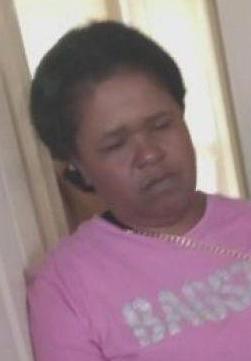
On the evening of July 6, 2014, Crystal Renee Brown, a 44-year-old African American woman from Wilmington, Delaware, was fatally shot while returning from a neighborhood convenience store. What should have been an ordinary Sunday evening ended in tragedy when Brown became an innocent bystander caught in a barrage of gunfire near the intersection of West Seventh and North Adams Streets.
She lived just a block away, and her sudden death devastated her family, friends, and a community already struggling with gun violence.
Shortly before 10:00 p.m., Brown had visited Adams Market, a corner convenience store at Seventh and Adams Streets. She was leaving the business with relatives when an argument involving two teenage girls escalated into a physical confrontation outside. The disturbance attracted approximately 30 people, creating a crowd near the store. Brown attempted to avoid the confrontation by walking around the gathering. Within moments, gunshots erupted nearby, turning the intersection into a dangerous scene as people scrambled to escape.
Investigators determined that the gunfire originated near Sixth and Adams Streets and was not directly related to the fight outside the market. Police believed two unidentified gunmen were involved in an exchange of gunfire, with at least 20 shots discharged from multiple weapons. Brown was struck by two stray bullets, including a wound to her chest. She had not participated in the disagreement and was simply attempting to make her way home when she was caught in the shooting.
Wilmington police officers responding to emergency calls discovered Brown critically wounded in the street. Officers immediately began performing CPR while awaiting emergency medical personnel. Paramedics subsequently transported her to Christiana Hospital, where medical staff attempted to save her life. Despite those efforts, Brown succumbed to her injuries. Her death was reported on July 7, although the shooting and her death occurred on July 6.
The circumstances were especially devastating because Brown's relatives witnessed the violence. Some of the family members accompanying her were preteens, and the shooting unfolded in front of people who knew and loved her. The sudden loss left her relatives struggling to understand how a routine trip to a neighborhood store could have ended so violently. Brown had reportedly worked as a legal aide for a Wilmington law firm and was remembered by friends as a caring person whose life had been taken without warning.
In the days following the shooting, Wilmington police launched an investigation to identify the individuals responsible. Detectives canvassed the surrounding neighborhood, distributed wanted flyers, and appealed to residents who might have witnessed the gunfire. Investigators believed that numerous people in the area could provide valuable information, particularly because approximately 30 individuals had gathered near the market when the violence occurred. Nevertheless, authorities reported difficulty obtaining cooperation from witnesses.
On July 14, 2014, Wilmington Police Chief Bobby Cummings returned to the area with other officers and members of Brown's family for a public appeal. Police emphasized that identifying the gunmen was essential not only to securing justice for Brown but also to preventing additional violence. Corporal Mark Ivey explained that investigators were searching for two dangerous suspects who remained unidentified. Authorities stressed that the shooters had demonstrated a willingness to discharge firearms in a populated neighborhood, placing innocent residents at risk.
Brown's mother, Doreen Hovington, participated in the appeal and publicly pleaded for anyone with information to come forward. Speaking about those responsible for her daughter's death, Hovington expressed the tremendous emotional loss the family had endured, saying, "You put a big hole in my heart." Her statement reflected the heartbreak of a mother seeking answers while knowing that people in the neighborhood might possess information capable of helping investigators identify the killers.
Brown's death also became part of a wider public discussion about shootings in Wilmington. At the time, the city was experiencing a troubling increase in homicides, and residents were increasingly concerned about gunfire in residential neighborhoods. Her killing drew particular attention because she had no apparent connection to the dispute or the people exchanging gunfire. Community members organized a neighborhood gathering near Sixth and Adams Streets on July 10 to support her family and demonstrate opposition to the violence.
Family and friends gathered to remember Brown during a celebration of life held on July 11, 2014, at the House of Wright Mortuary on East 35th Street in Wilmington. She was preceded in death by her father, Charles Miller Jr., her brother, Troy Brown, and her stepfather, Robert Hovington Jr. She was survived by her mother, Doreen Hovington, her sister, Sheila Lewis, her brother, Harry Brown, and numerous other relatives and friends. Messages left in her memory described a beloved family member, childhood friend, and compassionate individual whose absence would be felt for years.
Despite the public appeals and the considerable number of potential witnesses, investigators were unable to establish sufficient evidence to publicly identify or arrest the individuals responsible. The two suspected gunmen were not publicly named in the original investigation, and no confirmed criminal charges, trials, or convictions connected to Brown's killing have been reported.
The case remained unresolved more than a decade later. In May 2026, renewed attention was drawn to the intersection of Seventh and Adams Streets following another deadly shooting in the neighborhood. A Delaware News Journal report revisited Brown's death and confirmed that her 2014 killing remained unsolved. The account recalled that she had been walking out of the corner store with relatives when the gunfire erupted and that the fatal shooting had occurred in front of members of her family.
Crystal Renee Brown's death remains a painful example of the devastating consequences of indiscriminate gunfire. She was not an intended participant in the violence, yet her life ended because armed individuals opened fire in a neighborhood filled with residents and bystanders. Although police identified two suspected shooters as the focus of their investigation, their identities and the circumstances behind the gunfire have never been publicly established through an arrest or conviction. For Brown's surviving family and friends, the passage of time has not erased the loss, and the unanswered questions surrounding her killing remain a continuing obstacle to justice.