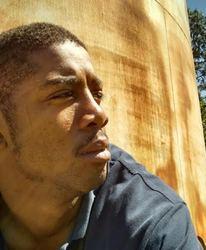
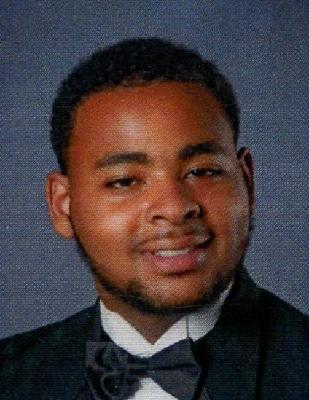
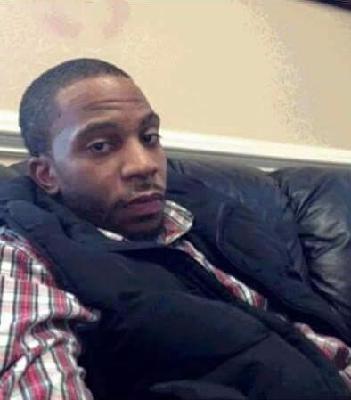
Dontray Jamar Hendricks, a 24-year-old Black/African American man from Dover, Delaware, was found dead on March 30, 2016, at the Port Mahon fishing pier east of Little Creek. Delaware State Police were sent to the secluded pier shortly before 12:40 p.m. after receiving a report of an unresponsive person. Paramedics pronounced Hendricks dead at the scene, and his body was taken to the Delaware Division of Forensic Sciences.
An autopsy determined that he had been shot, and authorities formally classified his death as a homicide.
The investigation revealed that Hendricks had been drawn to Port Mahon as part of a planned robbery. Chelsea Braunskill, who knew Hendricks through marijuana transactions, contacted him and said that she wanted to purchase marijuana and smoke with him. Hendricks picked up Braunskill, and Braunskill’s roommate, Alexis Golden, accompanied them to the pier. The location was isolated, and Hendricks apparently believed the meeting was social rather than an ambush.
About ten to fifteen minutes after they arrived, Daiquan T. Bordley, Zhyhee Harmon and Christopher Gartner-Hunter reached the pier in Bordley’s vehicle. Court records described Braunskill, Bordley and Harmon as participants in a plan to commit a “lick,” or robbery, against Hendricks. The arriving men approached from behind, and a confrontation began. Hendricks became involved in a physical struggle with Bordley. During the encounter, Bordley shot Hendricks in the chest at close range. The wound was fatal, and Hendricks was left on the pier.
After the shooting, Bordley, Harmon and Gartner-Hunter fled in Bordley’s vehicle. Braunskill and Golden drove away in Hendricks’ car. Investigators later used witness accounts, cellphone information and text messages connected to Braunskill to reconstruct how Hendricks had been lured to the pier. His final communications included messages from a telephone associated with Braunskill, supporting the conclusion that the meeting had been deliberately arranged.
Police arrested Braunskill and Bordley in late April 2016, followed by Harmon on May 4. Braunskill, Bordley and Harmon were initially charged with first-degree murder, first-degree robbery, possession of a firearm during the commission of a felony and second-degree conspiracy. Although Gartner-Hunter was identified in court proceedings as having been present and fleeing with the other men, available case records indicated that he had not been charged in connection with Hendricks’ killing at the time those proceedings were discussed. Golden was also identified as being at the pier and leaving in Hendricks’ vehicle, but the available reporting does not show that she was charged with the homicide.
Harmon later pleaded guilty to second-degree conspiracy and two counts of possession of a firearm by a person prohibited, resolving multiple criminal cases against him. His plea carried a mandatory minimum prison term of ten years. Braunskill pleaded guilty in July 2017 to second-degree murder and second-degree conspiracy. Her murder plea exposed her to a sentence ranging from a mandatory minimum of fifteen years to as much as life imprisonment. The available sources clearly report her guilty plea but do not consistently provide the final sentence imposed.
Bordley proceeded to a non-jury trial in Kent County Superior Court. In August 2018, a judge found that Bordley had personally killed Hendricks by shooting him in the chest after Hendricks was lured to Port Mahon for the robbery. Bordley was convicted of first-degree murder, first-degree robbery, possession of a firearm during the commission of a felony and second-degree conspiracy. In October 2018, he was sentenced to life in prison plus six additional years, followed by two years of probation.
Bordley appealed his convictions, arguing in part that certain text messages had not been properly authenticated and that the trial judge had failed to give sufficient consideration to material that could have been used to challenge Harmon’s testimony. The Delaware Supreme Court rejected those arguments in January 2020 and affirmed the findings of guilt. Later court filings show that Bordley continued challenging his convictions through post-conviction proceedings, but the original judgment identifying him as the gunman and the life sentence remained in place.