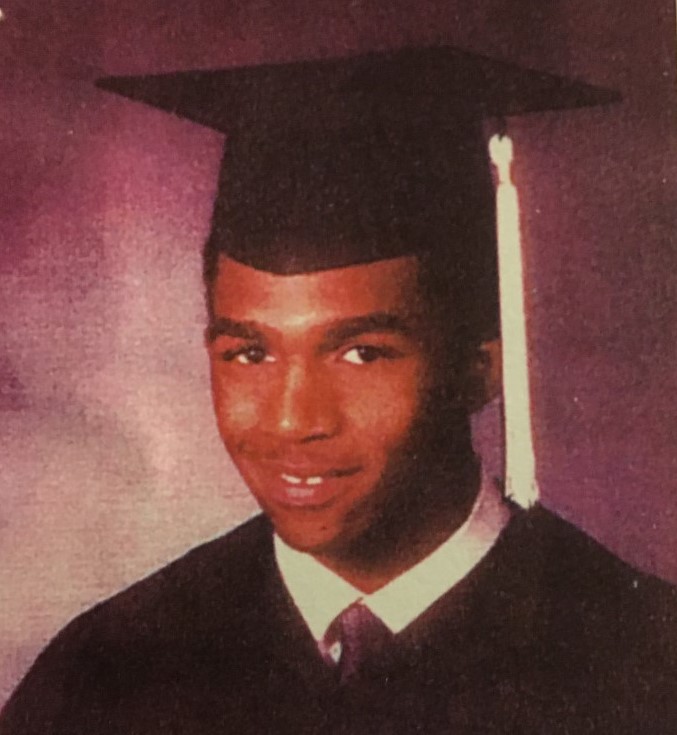
Allen Troy McKinley Cannon, known to relatives and friends as “Messy,” was a 34-year-old Black man whose life ended in Wilmington, Delaware, on the night of June 26, 2016. At approximately 10 p.m., Cannon was near the 900 block of North Spruce Street when he was shot in the head and leg. Wilmington police officers found him critically wounded and provided emergency assistance before he was transported to Christiana Hospital, where he was pronounced dead.
In the immediate aftermath, investigators appealed to the public for information, but the case remained unresolved for more than two years.
Evidence later presented in court revealed that the killing grew out of a high-stakes dice game held shortly before Cannon’s death. Brian Wilson, also known as Fudayl Wakim, reportedly arrived at the game carrying approximately $10,000. According to testimony, Cannon believed Wilson owed him money and asked an associate, Artie Pratt, to take the cash from Wilson. The attempted robbery failed, but prosecutors said it angered Wilson and led him to seek retaliation against Cannon. Wilson approached Robert Shepard and asked whether he knew anyone willing to “put some work in,” language Shepard understood as a request to find someone to kill Cannon. When Shepard said he did not, Wilson contacted Robert Teat III, known as “Bobby Dimes.” Teat allegedly arranged for Eric Ray to carry out the shooting in exchange for a $10,000 payment.
On the evening of the killing, Cannon was sitting in a vehicle near the location of the earlier dice game. Tomika Tate, Pratt’s mother, saw him crying and urged him to leave with her. Cannon stepped out of the vehicle but said that he was waiting for something and could not go. About ten to fifteen minutes later, the gunfire erupted from behind him. Tate was standing so close to Cannon that she fell to the ground as the shots were fired. She later identified Eric Ray as the gunman. Security-camera evidence also placed Ray and Teat near the scene before the shooting and showed Teat in the area immediately afterward. Additional evidence showed extensive communications between Wilson and Teat and between Teat and Ray. A photograph sent from Teat’s telephone the following day reportedly showed him holding a large amount of cash.
The investigation eventually involved the Wilmington Police Department and an FBI violent-crimes task force. In January 2019, a New Castle County grand jury indicted Brian Wilson and Eric Ray in connection with Cannon’s death. Wilson, then identified as a Wilmington resident, and Ray, of Newark, were arrested and charged with offenses arising from the murder. Wilson faced first-degree murder, first-degree conspiracy and first-degree criminal solicitation charges. Robert Teat was also identified by prosecutors as a participant in the conspiracy, but he had died before the case reached trial and therefore was never prosecuted for Cannon’s killing.
At Wilson’s trial, prosecutors described the shooting as a murder-for-hire carried out in retaliation for the attempted theft at the dice game. Tate identified Ray as the shooter, while other witnesses described Wilson’s efforts to locate a killer. Several incarcerated witnesses testified that Wilson had spoken about ordering the murder. One witness, Timothy Keyes, had previously told police that Wilson admitted arranging for Teat to hire Ray, although Keyes retreated from that statement on the witness stand. Wilson denied participating in the dice game or having any involvement in Cannon’s death. Despite his denial, a Superior Court jury found him guilty of first-degree murder, first-degree conspiracy and first-degree criminal solicitation in January 2020.
Wilson received the mandatory sentence of life imprisonment for the murder conviction, along with additional prison time for the conspiracy and solicitation offenses. He was already serving a 21-year federal sentence for drug trafficking when he was prosecuted for Cannon’s murder. Wilson appealed, arguing that the trial court had improperly excluded testimony concerning a witness’s reputation, wrongly admitted certain text messages and failed to remedy the government’s late disclosure of information that could have been used to question a witness’s credibility. The Delaware Supreme Court acknowledged that some text messages should not have been admitted, but concluded that the error was harmless because the remaining evidence of Wilson’s guilt was extensive. On January 25, 2022, the court affirmed his convictions and sentence.
Eric Ray was arrested and indicted as the alleged gunman, and prosecutors initially reported that he would be tried separately. The publicly accessible sources reviewed for this synopsis do not clearly establish the final outcome of Ray’s case, such as whether he was convicted, entered a plea, had the charges dismissed or received a sentence. What the court record does establish is that eyewitness testimony identified Ray as the person who fired the fatal shots and that prosecutors maintained he had been recruited through Teat to kill Cannon for Wilson’s promised payment. Wilson’s conviction ultimately established in court that Cannon’s death was not a spontaneous street confrontation, but the result of a planned retaliation and paid killing set in motion after the failed attempt to take Wilson’s money.