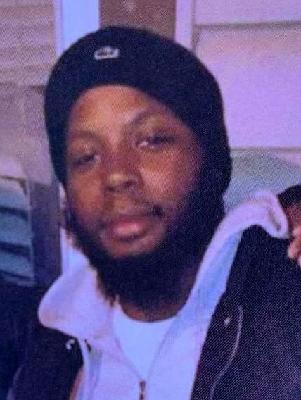
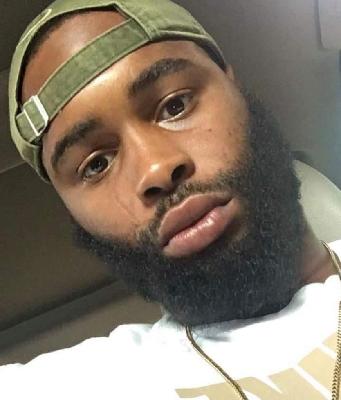
Yaseem Powell was an 18-year-old Black male from Wilmington whose life ended in a carefully planned shooting on March 28, 2017. Shortly after 4:00 that afternoon, Wilmington police were sent to the 2300 block of North Claymont Street in the city's Riverside neighborhood after reports of gunfire. Officer Brenda Merced arrived within minutes and found Powell lying on the ground with a gunshot wound to his head. She immediately began trying to save him, but the injury proved fatal. Powell was transported for emergency treatment and was pronounced dead later that evening.
The investigation revealed that Powell had left the Wilmington Job Corps Center shortly before the shooting. Two young men, Dai'yann Wharton and Benjamin Smith, had been waiting outside the building. Surveillance cameras recorded the pair following Powell through the neighborhood for approximately eleven blocks.
The footage did not clearly show which of the two fired the fatal shot, but it documented the sustained pursuit that preceded the killing and contradicted a message Powell had sent shortly before his death suggesting that he was walking behind them. Investigators determined that Powell was actually the person being followed.
Police recovered Powell's cellphone, shell casings and other physical evidence from the area. Approximately 175 feet separated the shell casings from the place where officers found him, indicating that he had moved or fallen some distance from the point where the gunfire began. The investigation soon became connected to another shooting later that night in which Andrew Ervin was wounded in the foot. A firearm recovered in connection with that incident was tested, and ballistics evidence linked it to the shell casings found near the scene of Powell's murder.
Authorities concluded that the killing grew out of an ongoing conflict between two Wilmington street groups. Powell was associated with Only My Brothers, commonly called OMB. Wharton and Smith were identified as members of a rival group called Shoot to Kill, or STK. According to testimony later presented in court, STK had been formed after the 2015 killing of Jordan Ellerby and was motivated in part by a desire for retaliation against OMB members. Prosecutors maintained that Powell was deliberately selected as a target because of that feud rather than being caught in a random act of violence.
Smith eventually admitted that he and Wharton had waited for Powell outside Job Corps with the intention of shooting him. Smith said the gun belonged to him but claimed Wharton used it to fire the fatal shot before returning it. Smith also explained that he later gave the weapon to Ervin. After Ervin was shot in what was described as retaliation for Powell's killing, a false robbery account was reportedly created to distance Smith and the others from the firearm. Smith later entered a plea agreement and agreed to testify for the prosecution. He pleaded guilty to manslaughter and conspiracy and received a five-year prison sentence.
Additional evidence against Wharton came from electronic messages he exchanged in the hours and days after the murder. In those conversations, Wharton appeared worried after learning that police had recovered the firearm, noting that the gun already had a body connected to it. In another exchange, he appeared to acknowledge responsibility while discussing how another person had learned about the killing. Prosecutors argued that these messages, combined with the surveillance recordings, ballistics evidence, Powell's cellphone records and Smith's testimony, established Wharton's direct involvement beyond a reasonable doubt.
Wharton and Smith were indicted in 2017 on first-degree murder, first-degree conspiracy and firearm-related charges, although their cases were later separated. Wharton chose to have his case decided by a judge rather than a jury. Following a Superior Court bench trial in June 2019, he was convicted of first-degree murder, possession of a firearm during the commission of a felony, first-degree conspiracy, possession of a firearm by a prohibited person and carrying a concealed deadly weapon. Although the video did not conclusively reveal who pulled the trigger, the court found Wharton legally responsible both as the alleged shooter and as Smith's co-conspirator.
Wharton challenged his conviction, arguing in part that prosecutors had identified several damaging cellphone messages too close to the beginning of his trial. The Delaware Supreme Court rejected that argument in January 2021, finding that the electronic material had previously been disclosed to the defense and that the trial court had acted within its discretion by allowing the messages into evidence. The justices described the overall proof of Wharton's guilt as overwhelming and upheld his convictions and sentence.
Wharton later pursued post-conviction relief by alleging problems with his legal representation and questioning whether the trial judge should have handled his case after previously accepting Smith's plea and imposing Smith's sentence. The Superior Court denied those claims in August 2024, finding no evidence that the judge had been biased or that Wharton had been denied a fair trial. The Delaware Supreme Court affirmed that decision on August 18, 2025, leaving Wharton's convictions intact. The prosecution of both men ultimately established that Powell's death was not an unsolved street shooting but a targeted killing carried out within a violent gang rivalry, followed by efforts to conceal the murder weapon and escape responsibility.