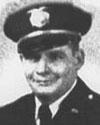
George Walter Henderson II, a 28-year-old White male, died in Cheyenne, Wyoming, on May 4, 1973, during what was supposed to be a major narcotics enforcement action. He was serving with the Wyoming Office of the Attorney General’s Division of Criminal Investigation and had joined Cheyenne police officers and federal drug agents as they moved to carry out search and arrest warrants tied to a broad drug case.
Online accounts describe the operation as part of a coordinated sweep that followed the indictment of 26 individuals, giving the day the feel of a large and carefully planned crackdown rather than a routine arrest.
In the middle of that tense effort, Henderson reportedly broke into pursuit of a suspect. The scene, as it survives in public summaries, turns in a split second: while chasing the fleeing person, he fell or crashed against a wall, and his own handgun discharged. The shot proved fatal. The available online record does not describe another person firing the weapon at him, and the death is generally characterized in memorial and law-enforcement sources as an inadvertent or accidental gunfire death that happened in the course of duty. That distinction matters, because it changes the story from a straightforward officer slaying to a sudden, chaotic tragedy born out of the violence and confusion that can erupt during a raid.
What remains especially striking is how little public detail survives beyond the basic outline. The suspect Henderson was pursuing is not identified in the online sources that are readily available, and those same sources do not provide a clear narrative of what happened to that person immediately afterward. There are references to the larger narcotics case and to the fact that the warrants were connected to numerous indictments, but the public material located online does not tie Henderson’s death to a named assailant, nor does it show a publicly documented murder charge arising from the fatal shot itself. In other words, while suspects and arrests existed in the drug investigation surrounding the raid, the online record does not show that anyone was arrested or prosecuted for causing Henderson’s death as a homicide.
The personal details that do survive make the loss feel even sharper. Public memorial sources note that Henderson had served only a short time with Wyoming’s attorney general investigators and had previously worked in California law enforcement. They also describe him as a military veteran and say he was survived by his wife and parents. Those fragments suggest a man still early in his career, building a life and reputation, whose death came not at the end of a long decline or an open-and-shut gun battle, but in a sudden burst of motion during an operation that was already charged with danger.
So the story that emerges online is not one of a solved murder case with a neat chain of arrests, charges, trial, and conviction. It is more haunting than that. George Walter Henderson II went into a coordinated drug raid in Cheyenne as part of a larger push against narcotics suspects, and before the operation was over, he was dead from the discharge of his own weapon while pursuing one of those suspects. The broader sweep appears to have involved multiple defendants on drug-related matters, but the publicly available online record does not identify a killer in Henderson’s death or show that any suspect was convicted for causing it. What remains is the image of a young investigator rushing forward in the heat of an operation, and a life ending in an instant before the story around him could ever be fully told.