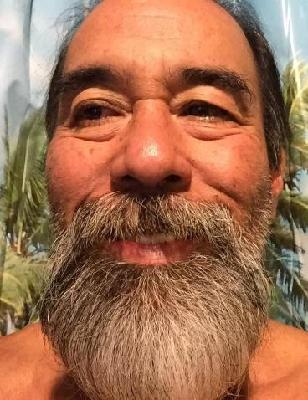
Albert Harry Pacheco Sr., a 68-year-old White man from Hilo, was found dead on Sunday afternoon, December 3, 2023, slumped in the driver's seat of his vehicle on a banana farm along Kauhiula Road, above Alae Cemetery. The call came in shortly before 4:45 p.m., and when patrol officers arrived they discovered him inside the parked car, with nothing at the scene that immediately screamed violence.
For a brief moment, it appeared to be the kind of quiet, inexplicable workplace tragedy that leaves people grasping for answers but expecting no criminal one. 
That first impression didn't survive the autopsy. On December 8, as a forensic pathologist examined his body, a single gunshot wound was located in his upper thigh area, a detail that transformed the entire narrative and sent detectives back to both the morgue and the farm road where he'd been discovered. The case was ruled a homicide and classified as second-degree murder, shifting the focus from a death to a hunt: who could have shot him, and why, in a place where he'd simply shown up to work. 
In the months that followed, investigators worked outward from the farm—interviewing employees, checking neighboring properties, and trying to reconstruct the victim's last movements and contacts. By May 2024, police said they still had not identified a motive or a suspect, and the same uncertainty remained a year after the killing, when detectives again renewed their request for information and confirmed they had also spoken with friends and family in an effort to find the missing thread that would explain what happened. 
As of those official updates, no arrests had been announced and no suspect or suspects had been publicly named. The investigation remained open, defined as much by what was known—a man found dead in his car at a banana farm, felled by a single gunshot—as by what was still missing: a motive, a person of interest, and the moment when the case finally turns from questions into charges.