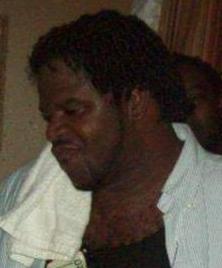
In the rural quiet of Fayette County, Alabama, a chain of events was set in motion on March 8, 2002, that would ultimately lead to the death of a dedicated public servant. On that day, White male Game Warden Jimmy Dean Hutto, at the age of 35, was assisting the Fayette County Sheriff's Department in serving a narcotics warrant at a residence in the Wayside community.
It was a task fraught with peril, a reality that tragically unfolded when officers attempted to enter the home.
As law enforcement made their entry, a man inside, David Ray Mosher, opened fire. In the ensuing chaos, Hutto was struck by a bullet in the lower abdomen. The wound was severe, and he was immediately rushed to a local hospital for emergency medical treatment. For two weeks, he fought for his life, a battle that his doctors and loved ones hoped he would win. He showed enough improvement to be released from the hospital, a brief and hopeful return home that was shattered just three days later by the onset of complications from his injury. Readmitted to the hospital, his condition worsened. On March 25, 2002, seventeen days after he was shot, Game Warden Jimmy Dean Hutto succumbed to his wounds.
The investigation into the shooting of Game Warden Hutto led to the arrest of David Ray Mosher. In the face of overwhelming evidence and the gravity of his actions, Mosher eventually entered into a plea agreement to avoid a potential death sentence. In December 2003, he pleaded guilty to a string of charges, including murder for the death of Hutto, three counts of attempted murder for the other officers he fired upon, and unlawful distribution of a controlled substance.
For his crimes, David Ray Mosher received a sentence of five consecutive life terms in prison. The justice system ensured that the man responsible for the death of Game Warden Hutto would be held accountable for his actions. In 2023, after serving a portion of his sentence, Mosher became eligible for parole. However, the Alabama Board of Pardons and Paroles denied his request for early release, ensuring that he would continue to serve the significant sentence handed down for the violent end of a dedicated officer's life.