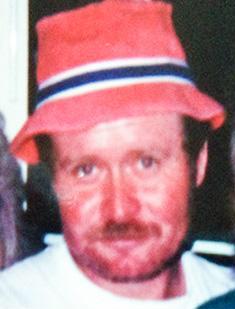
William Lee Worrell, a 58-year-old man from Alexander City, Alabama, was reported in local and memorial records as dying in the immediate span of July 8 and July 9, 2014, with one source tying the fatal incident to July 8 and his funeral-home obituary stating that he passed away on July 9 at his residence. The available online accounts paint the picture of a sudden, deeply personal tragedy that unfolded at home rather than a stranger attack in the street.
His obituary places him in Alexander City at the time of his death and notes that he had been born on April 4, 1956, in Hurtsboro, Alabama, the son of Marcus Daniel Worrell and Sybil Merle Bundy Worrell.
The clearest description of what happened comes from online references to contemporaneous news coverage, which describe the death as an apparent suicide following an argument with his sister over dogs. In that telling, the final moments of William Lee Worrell’s life were rooted in a domestic dispute that escalated into a fatal gunshot. The case was cataloged by gun-violence tracking sites as a fatal shooting in Alexander City, but the surviving descriptions do not point to an outside assailant lying in wait or a larger criminal conspiracy. Instead, the story that emerges is of a family conflict that turned catastrophic inside the home.
Because the reporting available online characterizes the death as an apparent suicide, there does not appear to have been a murder suspect, a manhunt, or a prosecution tied to his case. I did not find reliable online reporting showing that anyone was arrested, charged, tried, or convicted in connection with William Lee Worrell’s death. The absence of those later developments is consistent with the way the incident has been summarized in the public record: as a self-inflicted fatal shooting after a dispute, not as a homicide committed by another person.
After his death, the public record shifted quickly from the circumstances of the incident to remembrance. His funeral-home obituary announced that a memorial service would be held at a later date in Hurtsboro. In that brief transition from breaking-news language to obituary language, the story becomes quieter and more intimate: a man whose life ended abruptly in Alexander City, leaving behind family, a hometown connection to Hurtsboro, and a record that never developed into an arrest case or courtroom proceeding.