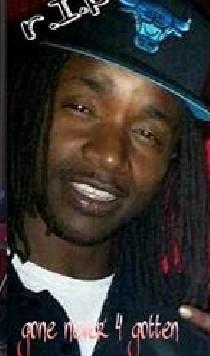
LaJarvis Holmes, a 30-year-old Black man from Birmingham, was killed on April 27, 2015, in the Powderly area of southwest Birmingham. Reports placed the shooting near Maple Avenue and 16th Way Southwest, close to his mother’s house, and the account that emerged afterward painted the killing as the final turn in a day that had already been boiling over. Earlier that same day, police had reportedly broken up a fight involving Holmes and his wife.
Hours later, the conflict was no longer just an argument. It ended in gunfire, with Holmes dead in a neighborhood that had become the setting for a deeply personal confrontation.
The circumstances described in local reporting suggest that the shooting grew out of that domestic dispute rather than a random attack. Investigators said a male friend of Holmes’ wife was believed to be the shooter, and both the wife and that male friend were taken into custody not long after the killing. In those first moments, the case appeared to be moving toward arrests, with police detaining the two central figures while detectives worked to sort out what had happened and why. The details that surfaced publicly gave the impression of a confrontation that escalated quickly, fueled by the emotional fallout of the earlier fight and ending just steps away from family ground.
But the case did not unfold like a straightforward murder prosecution. The two people taken into custody were later released, and the matter was left to a grand jury to consider whether Holmes’ death had been caused by a criminal act or whether the shooting would be viewed as self-defense. That distinction seems to have defined the case from that point forward. In the available public reporting, the wife and her male friend remained the key figures tied to the incident, yet the case did not produce the kind of immediate public murder charge that often follows a fatal shooting.
No later public reporting located online appears to show a conviction in Holmes’ death, and the most detailed accounts available continue to point back to that same unresolved question of justification. What remains is the outline of a tragedy that began with a domestic clash, spilled back into the streets of Powderly, and ended with LaJarvis Holmes dead while the legal system weighed whether the man suspected of firing the shot had committed murder or acted in self-defense.