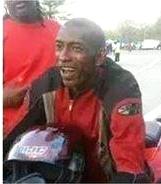
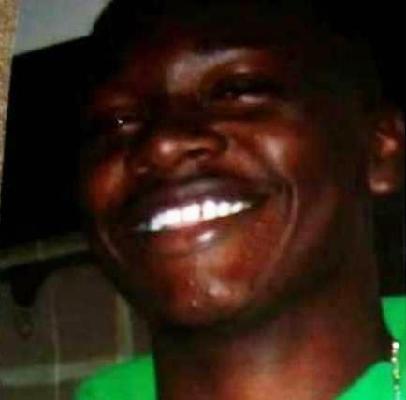
Larry Cole was 47 when his life ended, and the absence of answers leaves a particular kind of quiet behind. He was a man from Birmingham, Alabama, and the fact of his death is the only certainty you’ve given—yet even that single certainty carries weight. A death is not just an ending; it is a sudden gap where routines used to be, a chair left empty, a phone that won’t ring again with his voice on the other end.
For the people who knew him, grief would not arrive as one clean moment, but in waves: the shock first, then the slow, relentless understanding that the world has moved on while their hearts are still catching up.
In a city like Birmingham, where streets and neighborhoods hold stories that rarely make it beyond the block they happened on, the name Larry Cole would have meant something specific to someone. To family, he was not a headline—he was a son, perhaps a brother, maybe a father, an uncle, a friend, a familiar presence with habits and preferences and a way of laughing that cannot be recreated. Someone will remember how he took his coffee, what music he liked, what he argued about, what he always forgave. Someone will remember the last time they saw him and replay it, not because it changes anything, but because love tries to bargain with time when time refuses to listen.
When a person dies and the circumstances are unclear, the pain becomes complicated. It’s not only mourning what was lost; it’s living with what is unknown. The mind searches for a narrative that makes sense, but it keeps coming up against a blank space. People begin to cling to fragments—something someone said, a detail that might matter, a rumor that may or may not be true—because uncertainty can feel unbearable, and human beings are wired to fill silence with meaning. In those moments, the grief is not passive. It becomes a kind of vigilant waiting, a constant listening for any new piece of information that could explain why Larry is gone, what happened, and whether anyone will be held responsible.
With only the information you’ve provided, there is nothing to name—no suspect to describe, no arrest to report, no charge to follow through courtrooms, no conviction that might offer closure. There is only the reality that Larry Cole is dead, and that reality sits heavy on the people who cared about him. For them, each day after would likely have been divided into “before” and “after,” the way tragedy does. Birthdays would arrive and feel wrong. Holidays would come and carry an extra ache. Ordinary moments—driving past a familiar corner, hearing a song, seeing someone who looks like him from the back—would tug grief back to the surface without warning. The loss would become part of the texture of their lives.
Even when details are scarce, dignity is not. Larry Cole deserves to be remembered as more than the moment he died. A person’s life is measured in countless small human things: the conversations he had when nobody was recording, the times he showed up, the times he didn’t but wished he had, the kindness he gave when he could, the burdens he carried when he couldn’t. If there are people still looking for clarity about his death, their persistence is its own form of love. It means Larry mattered. It means he is not being allowed to disappear into a statistic or a shrug.
And if, someday, answers do come—if there is a suspect, an arrest, a trial, a verdict—those facts will matter because they speak to accountability. But even then, they won’t fully translate what was taken. Justice can be necessary, but it is never the same thing as restoration. The real story, the one that lasts, is that Larry Cole lived, and people knew him, and now they are left carrying the weight of his absence. In that space between loss and understanding, the only thing that can be said with certainty is this: his death changed the world for the people who loved him, and their grief is proof that he was here.