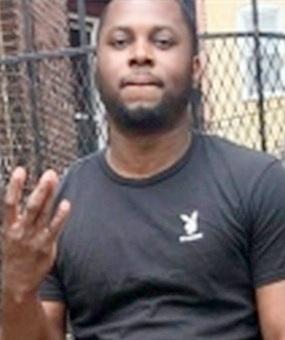
Sharlton Deshazo-Best was 19 years old, a Black male from Philadelphia, Pennsylvania, whose life was taken on November 3, 2007. He died in the city he called home, in a place where ordinary streets, familiar blocks, and neighborhood routines should have held the simple promise of another day. Instead, his name became part of Philadelphia’s homicide record, tied to the 300 block of West Queen Lane, where a young man with his whole adulthood still ahead of him was killed.
At 19, Sharlton
was still standing at the edge of life’s beginning. He was at an age when people are still discovering who they are, still imagining what might come next, still carrying pieces of childhood while stepping into the responsibilities and hopes of being grown. A life at that age is not supposed to be summarized by a date, a location, and a case status. It is supposed to be full of future plans, late-night conversations, family memories, friendships, lessons learned the hard way, and dreams that are still being shaped. Whatever Sharlton hoped for, whatever he loved, whatever made him laugh, and whatever paths he imagined for himself were all taken away when his life ended in violence.
The public information available about his death is painfully limited. His homicide is listed as having occurred on November 3, 2007, with his date of death recorded the same day. The location connected to the case is the 300 block of West Queen Lane in Philadelphia. Beyond those details, the record does not provide a full account of what happened before he was killed. It does not publicly explain where he had been headed, who he had been with, whether there had been an argument, whether he was targeted, or whether he was simply caught in a moment of violence that turned fatal. The absence of those details leaves a heavy silence around the case, one that makes the loss feel even more unfinished.
What is known is that Sharlton’s death was not just an incident or a statistic. It was a sudden and devastating break in the lives of the people who knew him. For his family, his killing meant the kind of grief that does not end when the funeral is over. It meant waking up to the reality that someone they loved would never come home again. It meant birthdays without him, holidays with an empty place, and years passing while the questions remained. For his friends, it meant remembering him at the age he never got to grow beyond. For the community, it meant another young life lost to violence in Philadelphia, another name added to a list that represents real people, real families, and real heartbreak.
The case is especially painful because there does not appear to be any public record of an arrest. Available information lists the case as open with no arrest, meaning no suspect has been publicly identified as being charged in connection with Sharlton’s death. No public details found name a suspect or suspects, describe a motive, or explain whether investigators believed the killing was connected to a personal dispute, neighborhood violence, retaliation, or another circumstance. There are also no publicly available details found about charges, court proceedings, a trial, a plea, a conviction, or sentencing in the case.
That lack of resolution leaves Sharlton’s story suspended between remembrance and unanswered questions. Someone knows what happened on West Queen Lane that day. Someone may know who was present, what led to the violence, or who was responsible for ending his life. Yet in the public record, his case remains one without the closure that families so often hope for after a homicide. Justice, in cases like this, is not only about a courtroom or a sentence. It is about truth. It is about acknowledging that a young man’s life mattered enough for the full story to be known.
Sharlton Deshazo-Best should be remembered as more than the circumstances of his death. He was a young man from Philadelphia whose life had value, whose future was stolen, and whose loved ones were left to carry the weight of a loss that no family should have to endure. His death on November 3, 2007, remains marked by the sorrow of what was taken and the frustration of what has not been publicly answered. Until there is an arrest, until someone is held accountable, and until more of the truth is known, his case remains an open wound in the record of Philadelphia’s violence and in the hearts of those who remember him.