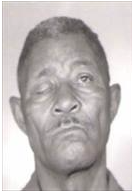
Do you know who murdered Manuel? Manuel “Uel” Carrillo was a 54-year-old man living in Tulsa, Oklahoma when his life was cut short at the very beginning of 1993. In the early hours of January 3, he ended up in a vacant lot tucked behind the Pit Stop convenience store on North Peoria Avenue, a busy corridor that cuts through north Tulsa. Later that day, someone came across his body lying in that lot, behind and just east of the store at 1627 N.
Peoria, and the discovery turned an ordinary winter day into the start of a lingering mystery that has never been resolved.
When officers and medical personnel arrived, it was immediately obvious that Manuel had met a brutal end. Official summaries describe how he had suffered severe blunt-force trauma to his head and face, injuries so devastating that they were identified as the cause of death. The nature of the wounds suggested that he had been beaten, not struck by a vehicle or killed from a distance, and that whoever attacked him had been close enough to inflict repeated blows. The vacant lot, hidden from the main road but only steps from the convenience store's lights and traffic, offered just enough isolation for a violent assault to unfold out of sight.
In the sparse accounts that exist, one detail about Manuel stands out: he was reported to suffer from Alzheimer's disease. Investigators have noted this in official cold case listings, emphasizing that his condition could have made him especially vulnerable—someone who might become disoriented, wander, or struggle to protect himself if confronted. The idea that an older, cognitively impaired man could be lured or cornered in the dark behind a neighborhood store adds a layer of quiet cruelty to the scene, turning the empty lot into a place where someone appears to have taken advantage of his confusion and frailty.
From the beginning, detectives have suspected that robbery may have been a motive. The city's cold-case records and later crime summaries state that robbery is considered a possible driver behind the attack, hinting that whoever killed Manuel may have been seeking money or valuables and was willing to beat him to death to get them. But beyond that broad theory, public information about the investigation remains thin. There are no detailed descriptions of a getaway car, no widely circulated composite sketches, and no mention of a clear sequence of events leading up to the moment Manuel ended up behind the store. Everything that is known publicly comes down to a few stark facts: the location, the date, the manner of death, and the suggestion of a robbery gone violently out of control.
Over the years, the case has shifted from fresh investigation to enduring cold case. The Tulsa Police Department continues to list Manuel's killing in its unsolved homicide files, explicitly asking anyone with information to contact the Cold Case Unit. Community-focused efforts and true-crime projects have picked up his story as well, retelling the same limited details and asking, again and again, “Do you know who murdered Manuel?” These retellings underline what the official record implies: no suspect has ever been publicly named, and there are no reports of any arrests connected to his death. The man who beat him in that vacant lot has, at least so far, remained an unseen figure, slipping away into the dark of that January morning and into three decades of silence.
Today, the address on North Peoria has changed with time, the storefront and surroundings evolving as businesses come and go. Yet in the background of that familiar commercial strip, Manuel Carrillo's story still lingers: an older man with a failing memory, found beaten to death just behind a neighborhood convenience store, his final moments known only to the person or people who attacked him. The official pleas for information remain open, and the case is still counted among Tulsa's unsolved murders, a reminder that even a crime committed in a busy urban corridor can fade into near-obscurity when no one steps forward to name the killer.