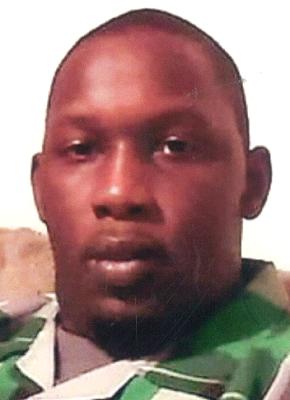
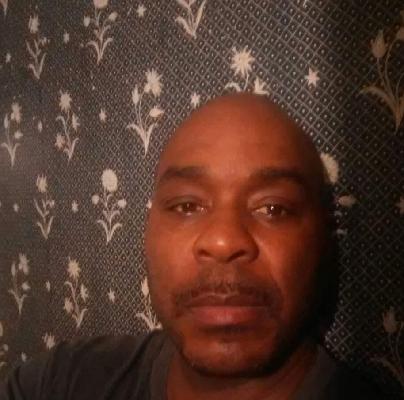
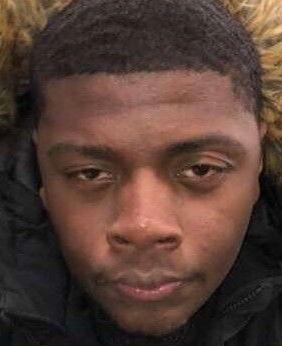
On February 26, 2010, Darius Lamont Crutchfield was 37 years old, a Black / African American male from Oklahoma City, when he was shot and killed, his life ending in an act of violence that added his name to a growing list of homicides in the city that year. Public case summaries record that he died and was found on the same date in Oklahoma City, and classify his death as “death by force,” specifying that he was shot and killed, with no indication that he survived long enough to reach a
hospital.
In the days after his killing, the formal traces of his life were gathered into obituary and memorial notices rather than detailed news reports. Funeral records and cemetery listings note his full name and birth date, place his birth on March 29, 1972, and confirm that he was laid to rest at Rose Hill Burial Park in Oklahoma City, where his grave is recorded in the cemetery’s mausoleum section. A brief funeral-home entry fixes the date of his death as February 26, 2010, and shows that services for him were scheduled for the morning of March 6, 2010, at Wildewood Christian Church on North Kelley Avenue, suggesting that family and friends came together there to say goodbye before he was buried.
Beyond these small anchors of fact, the public record of what happened to Crutchfield is strikingly thin. CrimeSolversCentral, a site that compiles information on unsolved homicides, summarizes his case in a single stark line: on February 26, 2010, he was shot and killed in Oklahoma City, his death described as part of a violent year marked by multiple homicides. In the victim details maintained there, his case is explicitly marked as unsolved, and there is no accompanying narrative describing where in the city he was attacked, what led up to the shooting, or who might have been present when it happened.
The same database notes that his file was first added in March 2022 and was still being updated as recently as November 2025, yet even with those recent revisions, no suspect names or arrest information are included. The entry lists “solved: no,” and there are no indications of charges filed, a suspect in custody, or even a publicly identified person of interest in connection with his killing. That silence, and the continuing classification of the case as unsolved more than a decade later, point to an investigation that has not led to any publicly acknowledged breakthrough or arrest.
In an online forum attached to the same case listing, people who have followed his story describe how those who knew Crutchfield remembered him—recollections that emphasize how loved he was by his friends and family and depict him as a caring, positive presence in their lives. Their words, written years after his death, convey a sense of bafflement that someone held in such regard could be taken in an act of senseless violence, and they underline that behind the sparse official entries lies a man whose absence continues to be felt.
His name now appears alongside hundreds of others in Oklahoma cold case and homicide databases, part of a broader landscape in which the state records more than a thousand homicide cases that remain unsolved. Within that larger story, Darius Lamont Crutchfield’s case remains one with more questions than answers: a single night in 2010 when gunfire claimed his life, no suspect publicly named, no arrest reported, and a family left with memorial notices and a grave at Rose Hill as the most concrete markers of a life ended too soon.