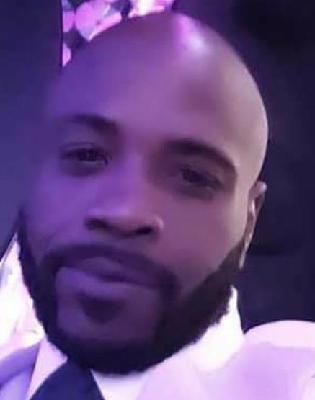
William L. Lovett, a 31-year-old Black male, was killed on June 5, 2010, in Oklahoma City, Oklahoma, his life ending in what authorities classified as a homicide, a death by force. The bare facts recorded in public case listings offer only a stark outline: his name, his age, his gender, the city where he lived and died, and the date on which everything ended.
Behind those sparse details lies the suggestion of a sudden eruption of violence, a day that began like any other but closed with police and medical responders marking off a scene and documenting yet another life cut short.
Reports describe Lovett’s death as the result of a violent altercation, an encounter that escalated to the point that he was fatally injured. In the confusion that followed, officers were left with more questions than answers. The scene was chaotic enough that, at first, investigators struggled to piece together exactly what had happened or who had been responsible. Early on, there were no clear suspects, only scattered leads and the grim certainty that someone had used force severe enough to end a man’s life in the middle of Oklahoma City.
As time passed, detectives turned to whatever tools they had left. One of the most tangible was security camera footage from nearby locations, the silent recordings that so often capture fragments of movement before and after a crime. According to publicly available summaries of the case, this footage would later help investigators identify potential suspects connected to the incident. Even so, the people seen or inferred from those images have not been publicly named, and there is no indication in open sources that any of them were ever brought before a court to answer for Lovett’s death. What remains visible is the outline of an investigation that progressed far enough to narrow its focus, but not far enough—at least in the public record—to deliver closure.
Years later, Lovett’s name continues to appear in online databases dedicated to unsolved or unprosecuted violent deaths in Oklahoma, updated periodically but still lacking the simple finality of an arrest record or conviction. His case sits among hundreds of other homicides and deaths by force in the state, emblematic of a wider pattern in which a significant share of violent crimes go unsolved and families are left waiting for answers that never quite arrive.
The passage of time has not erased him. Discussion threads linked to his case show that people still return to his name, expressing frustration that more than a decade has gone by without a clear public resolution and sharing their hopes that someone, somewhere, will come forward with the piece of information that finally makes everything fit. In that way, William L. Lovett’s story is not only the story of a single violent day in 2010, but also of the long, quiet years afterward—years in which his death remains a wound for those who knew him and a problem that, at least in the public eye, the justice system has yet to solve.