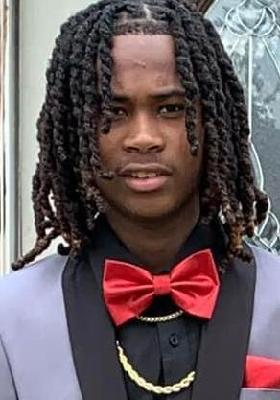
Brendon Jajuan Turner, an African-American man of 28, grew up with deep Oklahoma roots that tied him closely to both Ponca City, where he was born in March 1987, and the Oklahoma City community where he built his adult life. He was the oldest of six children, born to David Maze and Paula Turner, and family accounts describe him as a big brother who tried to set an example, graduating from U.S.
Grant High School in 2006 and going on to attend Langston University and Pioneer Technology Center as he worked toward a more stable future. Those who loved him remembered him as kind and good-hearted, a young man whose life was still very much in motion rather than winding down.
On August 13, 2015, that life was abruptly and violently cut short inside a modest home in south Oklahoma City. Around 4 p.m., police were called to a house in the 3600 block of South Kelley Avenue, where they found Turner inside with injuries “consistent with homicide.” He had been stabbed multiple times. The house belonged to a relative; Turner had been staying there while his uncle was in the hospital, turning a family home into a temporary refuge that, for a time, shielded him from the ordinary stresses of life. Instead, it became the scene of his death. First responders pronounced him dead at the scene, and word quickly spread through his family and community that something terrible had happened.
As details emerged, the picture that formed was of a brutal attack carried out in what should have been a safe space. Online case summaries drawn from early news reports describe Turner’s body being found inside that southeast Oklahoma City home, stabbed several times, his killing sending shock waves through relatives who had expected the house to be a place of healing while their loved one was in the hospital. Family members, speaking to reporters at the time, struggled to understand how someone they saw as warm and good-natured could meet such a fate, and their grief was sharpened by the fact that, in the immediate aftermath, there were no arrests and few public answers. Police asked anyone with information to call the homicide tip line, signaling that investigators were still trying to piece together what had unfolded inside the home that August afternoon.
For more than a year, the case moved largely out of the public eye while detectives worked behind the scenes. Then, in October 2016, there was a break. Acting on information that a woman wanted for an Oklahoma City murder was in Tulsa, officers from the Tulsa Police Warrant Squad and agents with the Northern Oklahoma Violent Crimes Task Force went to work. They arrested 30-year-old Sumeika Byrd near the 5400 block of Martin Luther King Boulevard in Tulsa, after confirming that she was wanted in connection with the 2015 stabbing death of 28-year-old Brendon Turner. Authorities stated that Turner had been stabbed multiple times and identified Byrd as the suspect tied to an Oklahoma County warrant in his killing; she was to be transferred back to Oklahoma City to face charges.
When the case finally went before a jury, a fuller and more harrowing narrative emerged from testimony and evidence. Byrd, who worked as a prostitute and described prostitution as her primary source of income, testified that Turner was a client and that she stabbed him in self-defense. She told jurors that the two had sex at a house in south Oklahoma City and then got into an argument over money and drugs. According to her version, Turner pushed her into a dresser, prompting her to grab a pocket knife from the floor and begin swinging it in fear as she tried to escape. She claimed he chased her toward the doorway and into the driveway, and that she struck out at him while running, later slashing his car tires before fleeing because she believed he was still alive when she left.
Prosecutors, however, presented a starkly different picture. They emphasized what the crime scene and medical evidence showed rather than what Byrd said. Turner, they told the jury, had been stabbed 17 times, including fatal wounds to his heart and abdomen—injuries so devastating that investigators argued he could not possibly have chased anyone out of the house in the condition in which he was found. Police and prosecutors described finding him lying inside the home with catastrophic injuries, his internal organs exposed, a detail they used to argue that the violence was deliberate and sustained, not a panicked flurry of defensive blows. Defensive wounds on his arms and back suggested he was trying desperately to shield himself, while a notable absence of injuries to his hands undermined the idea that he had attacked Byrd. At the same time, they pointed out, Byrd had no defensive injuries at all, which, in the state’s view, was more consistent with her being the aggressor than a victim fighting for her life.
In closing arguments, prosecutors focused on the sheer number and nature of the stab wounds, telling jurors that inflicting 17 separate knife wounds required intention and effort, the kind of sustained attack that speaks to a desire to end a life rather than ward off an assault. The jury accepted this interpretation. They rejected Byrd’s self-defense claim and convicted her of first-degree murder in Turner’s death, recommending a sentence of life in prison—a recommendation the judge followed, sending her to prison for life.
Even after the trial, the case continued briefly through the appellate courts. In 2019, the Oklahoma Court of Criminal Appeals reviewed Byrd’s conviction and sentence. The court affirmed the life sentence, again summarizing the case as one in which a woman who worked as a prostitute admitted stabbing a client to death, but whose claim of self-defense was undercut by the physical evidence and the pattern of injuries on Turner’s body. With that ruling, the legal system closed the book on the question of who killed Brendon Turner: Sumeika D. Byrd remains the sole identified perpetrator, convicted and serving a life term for his murder. For Turner’s family, the court decisions offered a measure of formal justice, but they did not erase the memory of the 28-year-old son, brother, and relative whose life ended on an ordinary August afternoon in a house that was supposed to keep him safe.