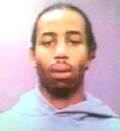
Do you know what happened to Johnny Baker? Johnny Baker, a 66-year-old white male landlord in the Tulsa area, disappeared on November 19, 2010, after a day spent tending to the rental properties he owned and collecting payments from his tenants. He was retired from his earlier work but still active as a property owner, known to carry substantial amounts of cash when he made his rounds. That November day ended without him returning home, and it marked the beginning of a mystery that would eventually lead investigators from a locked
pickup on the side of the interstate to a wooded stretch near Keystone Lake outside Sand Springs.
According to investigators, the first sign that something was wrong came when Baker’s daughter went to the Hard Rock Casino, where her father liked to play high-stakes poker and was a familiar face at the tables. He never appeared. Driving back toward home, she spotted his truck sitting westbound along I-244 near Memorial, locked and secure with no obvious sign of a struggle and no sign of Johnny himself. She reported him missing that same day, and the case was opened as a missing-person investigation with the Tulsa County Sheriff’s Office. From that point on, detectives began trying to piece together his last movements: a retiree making his usual rent-collection rounds, carrying cash, traveling between his properties and the casino, and then simply vanishing between the highway and whatever lay beyond it.
For a little more than two months, Baker existed only as a file and a photograph on a missing-persons board. That changed on a cold January day when two men were hiking and searching for scrap metal near the south side of Keystone Dam, in a wooded area off Old Highway 51 at 22700 West 21st Street, close to Sand Springs. Instead of metal worth salvaging, they came upon a partially decomposed body lying in the brush, with no identification to say who he was or how he had ended up there. Deputies and crime-scene personnel responded, and the body was recovered and taken to the medical examiner. It was the next day, when a detective working a missing-person case brought dental records for comparison, that the unknown man was finally given a name: the John Doe from the lakeside woods was identified as Johnny Baker. Official records list January 26, 2011, as the date his body was found, closing the missing-person portion of the case and turning it into an unexplained death in a remote corner of the county.
Once Baker was identified, investigators tried to walk backward through those missing weeks and understand how a landlord who started his day in Tulsa had ended up near Keystone Lake with no ID and no clear explanation. They knew he had been out that day checking on his rental properties and collecting rent, a routine in which he was known to carry a large amount of cash, whether headed to or from the casino or his tenants’ homes. They also knew that his truck had been left along a busy interstate corridor while his body was ultimately found in a wooded, less-traveled area near the dam, suggesting that someone had moved either him or his vehicle—or both—after he was last seen. Publicly available summaries do not describe any specific injuries or a precise medical cause of death, but the circumstances have been treated as suspicious from the beginning, with Baker listed among Tulsa County’s cold cases and advocacy groups asking the public to help “solve this case” rather than treating it as a natural or accidental death.
Over the years, detectives interviewed family members, friends, and people connected to Baker’s rental business, but the trail never produced the kind of hard evidence that could anchor an arrest. A detailed television and web feature on the case described how investigators had exhausted their leads and were again turning to the public, asking anyone who might know what happened to come forward. Despite the attention, no one has been charged in connection with Johnny Baker’s disappearance or death, and law-enforcement sites that feature his case still frame it as an open cold case in need of information rather than as a prosecution waiting in the wings. In the record that exists today, there are no publicly named suspects, no announced persons of interest, and no indication that an arrest has ever been made in relation to what happened to him.
One detail that later drew renewed attention to Baker’s file did not come from the original investigation, but from what happened years afterward to one of the men who had rented from him. An advocacy post noted that a tenant named Gregory Epperson had been renting from Baker around the time he disappeared. Years later, in 2017, Epperson was arrested in Tulsa for the strangulation of 19-year-old Kelsey Tennant, who was attacked in her south Tulsa apartment after interrupting a burglary; prosecutors initially sought the death penalty, and Epperson ultimately pleaded guilty to her murder. The overlap between Baker’s role as Epperson’s landlord and Epperson’s later violent crime led some cold-case advocates to wonder whether there could be a connection between the two cases. But those same advocates, along with available news coverage, emphasize that detectives have not established any link between Epperson and Baker’s death, and no charges or formal accusations tie him—or anyone else—officially to what happened to Johnny Baker near Keystone Dam. Today, more than a decade after his body was found in the trees above the water, Baker’s case remains an unsolved mystery, kept alive in sheriff’s-office listings and cold-case features that continue to ask for the tip or confession that might finally explain how his last ordinary day ended so far from home.