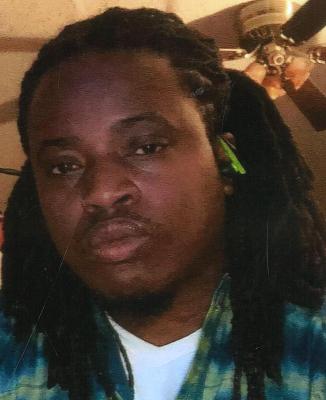
Bipinchandra Patel, a 61-year-old man, poured much of his life into the Oxford Inn, a modest two-story roadside motel on North Lincoln Boulevard in northeast Oklahoma City. For about eight years he ran the small property near Northeast 50th Street, a place that offered basic rooms and a simple lobby office where he spent long hours tending to guests and paperwork.
The motel stood close to busy arteries and local attractions like the Oklahoma City Zoo, drawing a mix of short-term travelers and longer-term residents, and Patel’s presence behind the office counter became a familiar sight to people who passed through.
On the night of December 15, 2012, that routine shattered. Late on a Saturday, an employee grew concerned when they could not reach Patel and went to check on him at the office. Looking through the glass, they saw something on the floor that did not look right. Around 11 p.m., the worker dialed 911, asking police to perform a welfare check at the Oxford Inn. Officers from the Oklahoma City Police Department arrived and entered the front office, where they found Patel lying on the floor. What they saw was serious enough that they quickly covered his body with a white sheet as the scene was secured and homicide investigators were called out.
By the time the news broke the next day, authorities had classified the death as a homicide and identified the victim through his family, who told reporters that Patel had owned the motel for about eight years. He had invested in a security camera system, with cameras mounted inside and outside the building, and police publicly expressed hope that those recordings might help explain what had happened in the quiet office before the worker’s grim discovery. The killing was a stark marker in the city’s year of violence, officially listed as Oklahoma City’s 96th homicide of 2012.
While investigators processed the office and collected footage and other evidence, family members were left to piece together the final hours of a man who had seemed firmly rooted in his work and community. Reports later noted that Patel’s wife had been overseas visiting relatives in India at the time of the shooting; she returned to Oklahoma City only after learning of his death, stepping into a life now dominated by grief, legal procedures, and the unanswered question of who had walked into the Oxford Inn office and pulled the trigger. The motel itself briefly closed in the aftermath, its quiet façade masking the shock and anxiety felt by employees, long-term residents, and nearby neighbors who had grown used to seeing Patel keeping watch over the property.
As days turned into months, the case remained stubbornly unresolved. Police combed through security footage, canvassed the area, and appealed to the public for information, but no public reports ever described a clear suspect or a motive that could neatly explain why the owner of a small northeast Oklahoma City motel had been shot to death in his own office. Coverage in later years, when new crimes at the Oxford Inn again drew television cameras, looked back on Patel’s killing as part of a troubling pattern: a robbery suspect discovered at the property in 2013, a shooting that wounded two people in 2016, and another homicide inside the motel in 2017 all reinforced the motel’s reputation as a magnet for violence along that stretch of Lincoln Boulevard. Through it all, retrospective accounts of the 2012 murder continued to describe it not as a closed chapter but as an open wound — an unsolved homicide that had taken the life of a hardworking motel owner and left his family without answers.
More than a decade later, unsolved-case databases and advocacy sites still list Bipinchandra Patel’s shooting as an open investigation, noting that despite the initial flurry of police activity and repeated calls for tips from the public, no one has been publicly charged in connection with his death. In these summaries, his story is reduced to a few stark lines — a date, a place, a motel office, a fatal gunshot — but behind that bare chronology is the quieter narrative of a man who turned a modest roadside inn into his life’s work, only to be killed in the very room where he had welcomed guests for years, leaving his family and community to live with the silence that followed.