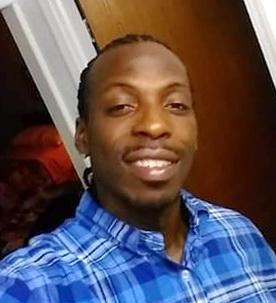
Randall Ragains, a 51-year-old white male from Oklahoma City, was known in his southwest-side neighborhood as a quiet, kind man who opened his modest home on Southwest 22nd Street to people who needed a place to stay, even while he struggled with serious health and mobility issues of his own. Years earlier, a severe neck injury in an oil field accident had left him partially paralyzed, forcing him to rely on crutches to move around.
In the days leading up to the attack, those crutches had gone missing, leaving him to crawl through his home, an image that neighbors later recalled with a mixture of pity and horror, knowing how vulnerable it must have made him to anyone who meant him harm.
On May 31, 2017, police and medical personnel became involved after he was found inside his house at 3113 Southwest 22nd Street with devastating injuries consistent with a severe assault. He was taken to OU Medical Center and admitted with what authorities described as “significant assault injuries,” and he never regained consciousness. He was placed in a coma, and over the next week family members, friends, and neighbors could only wait while doctors tried to save him. A week after he was brought in, in the early days of June 2017, he died from the trauma he had suffered, turning what had first been treated as an assault into one of Oklahoma City’s homicides for that year.
Those who lived nearby later described him as “a super nice guy that people took advantage of,” a man whose generosity in letting down-on-their-luck acquaintances stay at his home may have put him directly in harm’s way. He routinely allowed people with nowhere else to go to sleep there, even while he was struggling to move safely through his own rooms. After his death, neighbors spoke of their shock that anyone would target someone so physically fragile, and they began trying to keep strangers away from the property. A handwritten sign went up on the front door warning, “Do not enter! Place is being watched, will call 911,” a visible reminder that whoever had beaten him to death had not yet been held to account and might even have been someone who had once been welcomed inside.
The investigation that followed quickly shifted from an assault case into a homicide inquiry, but answers have remained elusive. When officers first took the report at the hospital, the incident was classified under domestic violence, and a suspect was listed in that initial paperwork, but the name was redacted from public records and has never been released. Detectives were at an immediate disadvantage: by the time police were called, Ragains was already unconscious, and they never had the chance to hear his account of what happened or who might have been inside his home when he was attacked. Investigators have instead had to piece together the final days of his life from relatives and neighbors, trying to reconstruct who had recently been staying there and what conflicts might have led to violence. Local case summaries and police statements indicate that, despite the early mention of a suspect, no arrest has been publicly reported in connection with his killing, and the homicide remains an open, unsolved case, with authorities still asking anyone who knows what happened inside that small house on Southwest 22nd Street to come forward.