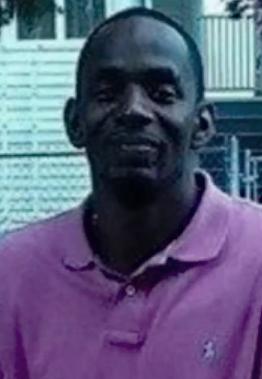
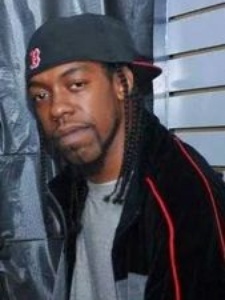
On a cold winter day in Boston, the sprawling grounds of the Mattapan Chronic Disease Hospital became a crime scene. It was Saturday, March 10, 1973, when the Boston Police Department received a call to investigate a death at 249 River Street. In the rear of the hospital complex, officers made a grim discovery: the body of a man who had been killed by ligature strangulation. He was identified as 34-year-old Edward Onessimo, a male whose life was cut short in an act of violence that remains a mystery more than half a century later.
The location of the discovery was a landmark in the Mattapan neighborhood. The facility at 249 River Street began its history in the early 20th century as the Boston Consumptives Hospital, a sanatorium built to isolate and treat the city's tuberculosis patients. By the 1970s, it had long been known as a chronic disease hospital, a place for long-term care situated on a large, multi-building campus.
Why Edward was there and what led to his murder on those institutional grounds are questions that have never been answered. Police released few details about the specifics of the crime scene, and the investigation yielded no immediate suspects.
The early 1970s were a turbulent time in Boston, marked by social upheaval and a number of high-profile, violent crimes that unnerved the public. The shadow of the Boston Strangler case from the previous decade still lingered, and the city would see numerous other homicides in 1973 that filled the pages of local newspapers. Amidst this backdrop, Edward Onessimo's murder was one of many violent deaths that year, and like dozens of others from that era, his case gradually went cold, leaving a permanent, unanswered question in the city's crime files.
The official investigation into Edward's death was handled by the Boston Police Department. The Office of the Chief Medical Examiner swiftly ruled the manner of death a homicide, confirming that he had been intentionally killed. Detectives would have canvassed the area, interviewed hospital staff and residents, and chased down any potential leads, but no arrests were ever made. Over the years, the case file has been passed down through generations of homicide detectives, a silent testament to a life taken and a crime unsolved.
Decades have passed, but the case of Edward Onessimo remains officially open. It is listed on the Boston Police Department's roll of unsolved homicides, a stark and minimal entry that notes his name, age, and the violent nature of his death. There is no public record of who Edward was as a person—no mention of his family, his work, his passions, or the people who mourned his loss. His story has been reduced to the brutal facts of its final chapter. Without new information, the trail has remained cold for more than 50 years.
As of today, the Boston Police Department continues to seek information that could finally bring a resolution to this decades-old homicide. No suspects or persons of interest have ever been publicly named, and the motive behind the murder remains unknown. The department encourages anyone with information, no matter how insignificant it may seem, to come forward. The hope is that someone, somewhere, holds the key that could finally provide answers and a measure of justice for Edward Onessimo.